Raw HeartwoodXylarium
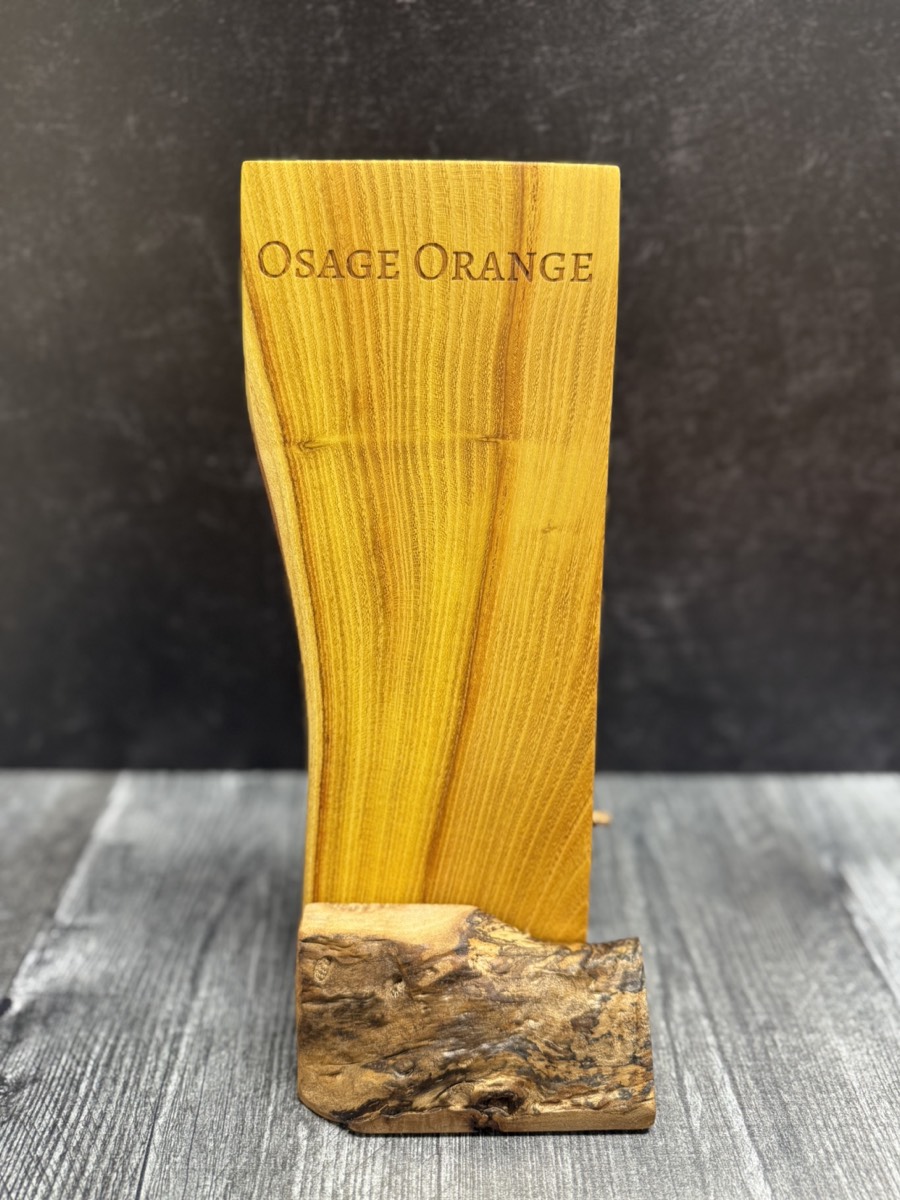
Osage Orange specimen — Maclura pomifera
DomesticMaclura pomifera

Osage Orange

One of the densest woods on the continent. The bowyer's wood.

Osage Orange (Maclura pomifera) is a domestic hardwood with a Janka hardness of 2620 lbf, one of the densest and hardest woods milled. Its heartwood ranges from brilliant golden yellow to fluorescent yellow-orange off the saw, oxidizing to russet brown over time.

Category
Domestic
Janka
2,620 lbf
Botanical
Maclura pomifera
Shipped at
6–8% MC

Maclura pomifera Native to a small region of the south-central United States (Red River basin of Texas

Native to a small region of the south-central United States (Red River basin of Texas.

One of the densest and hardest woods we mill. Brilliant golden yellow to fluorescent yellow-orange off the saw.

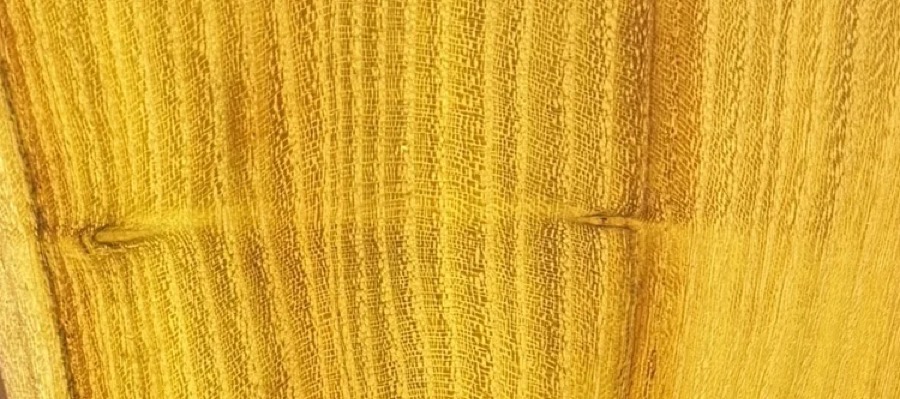
Detail of Osage Orange grain — figured wood texture, photographed at Raw Heartwood
A close read on the grain. Detail of this specimen

What you see.

Brilliant golden yellow to fluorescent yellow-orange off the saw. Oxidizes to a medium russet brown over time, faster under UV. Narrow pale yellow sapwood, clear separation. UV-blocking finishes will slow the color shift if you want to hold the yellow.

Heartwood color detail of Osage Orange (Maclura pomifera)

Heartwood, this specimen

How the grain runs.

Ring-porous, coarse, uneven, with strong growth-ring figure. Usually straight grain, sometimes irregular or interlocked on open-grown trees. High natural luster.

Closer detail of Osage Orange grain figure

Closer in

On the bench.

Very durable. Outlasts black locust and white oak in the ground. As good as anything native gets. Hard. Dense. Rough on cutting edges. Turns and finishes beautifully once you have it sized. Takes a glass-smooth surface. Pre-drill for any fastener. Faint at the cut. Not unpleasant. Occasional skin irritation reported. Live tree latex and fresh sawdust can sensitize susceptible workers.

The numbers, looked at directly.

Janka Hardness

0lbf

11,640 N. Side-hardness — force to embed a half-inch steel ball halfway into the wood.

Average Dried Weight

0lbs/ft³

855 kg/m³. At 12% MC.

Specific Gravity

0.76/ 0.86 at 12% MC

Basic over green volume; second number at 12% moisture content.

Hardness, in context
Pine 380 Cherry 950 Red Oak 1,220 H. Maple 1,450 Hickory 1,820 Jatoba 2,350 osage orange

A side-hardness measurement. Higher number, harder wood.

Shrinkage — radial / tangential / volumetric
3.5%radial
6.4%tangential
9.4%volumetric

On sourcing

Where this wood comes from matters.

Not on CITES. Not on the IUCN Red List. Supply is regional — hedgerows and farm clearings, not industrial forestry.

What it's for.

Worth knowing.

One of the densest and hardest woods we mill. The yellow heartwood produces a natural dye called morin — same compound that makes it fluoresce under UV. Useful for ID.

Sources & references.

  1. Wood Handbook — Wood as an Engineering Material (FPL-GTR-282) — USDA Forest Service, Forest Products Laboratory (2021)
  2. Silvics of North America: Maclura pomifera (Raf.) Schneid. — Osage-orange — Burton, J.D. (USDA Forest Service) (1990)
  3. Maclura pomifera — IUCN Red List of Threatened Species — Stritch, L. (2018)
  4. Maclura pomifera — Wikipedia contributors
  5. Osage Orange (Maclura pomifera) — The Wood Database
  6. Maclura pomifera — Fire Effects Information System (FEIS) — Stransky, John J. (USDA Forest Service, Rocky Mountain Research Station) (1990)

Common questions.

How hard is Osage Orange?
Osage Orange has a Janka hardness of 2620 lbf (11,640 N), per USDA Forest Products Laboratory values at 12% moisture content, making it one of the densest and hardest woods Raw Heartwood mills. It is hard and dense, rough on cutting edges, and requires pre-drilling for any fastener.
Is Osage Orange good for outdoor use?
Yes. It is very durable and outlasts black locust and white oak in the ground, which makes it well suited to fence posts and other ground-contact uses.
What is Osage Orange used for?
Traditional uses include archery bows (bois d'arc), fence posts, tool handles, turnings, instruments, decorative inlay, and natural dye. It turns and finishes beautifully once sized and takes a glass-smooth surface.

From the library to your bench

We mill, dry & sell Osage Orange in West Chicago.

Tell us what you're building and we'll cut to order.

Request a slab or a cut →