Raw HeartwoodXylarium
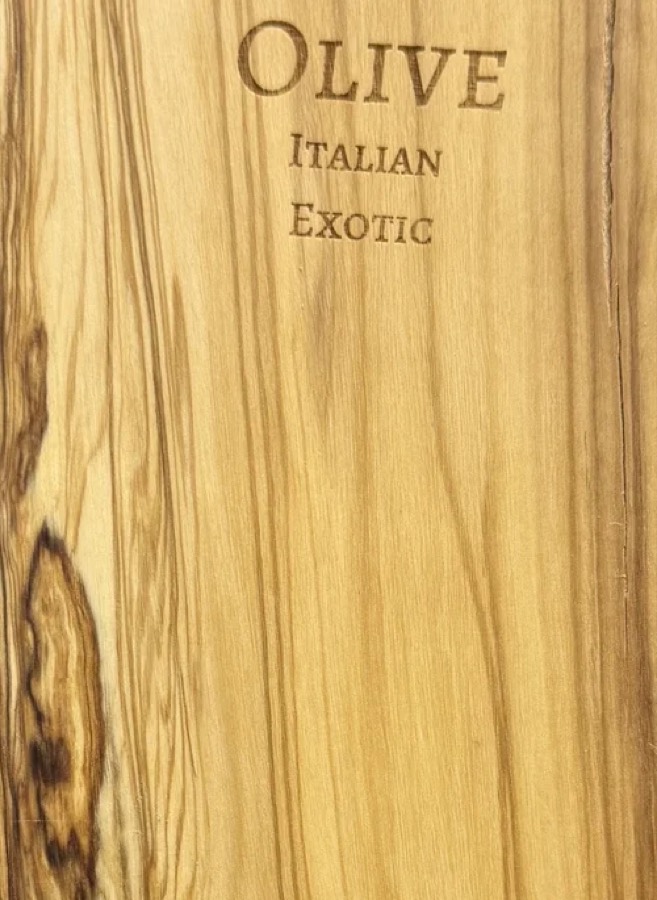
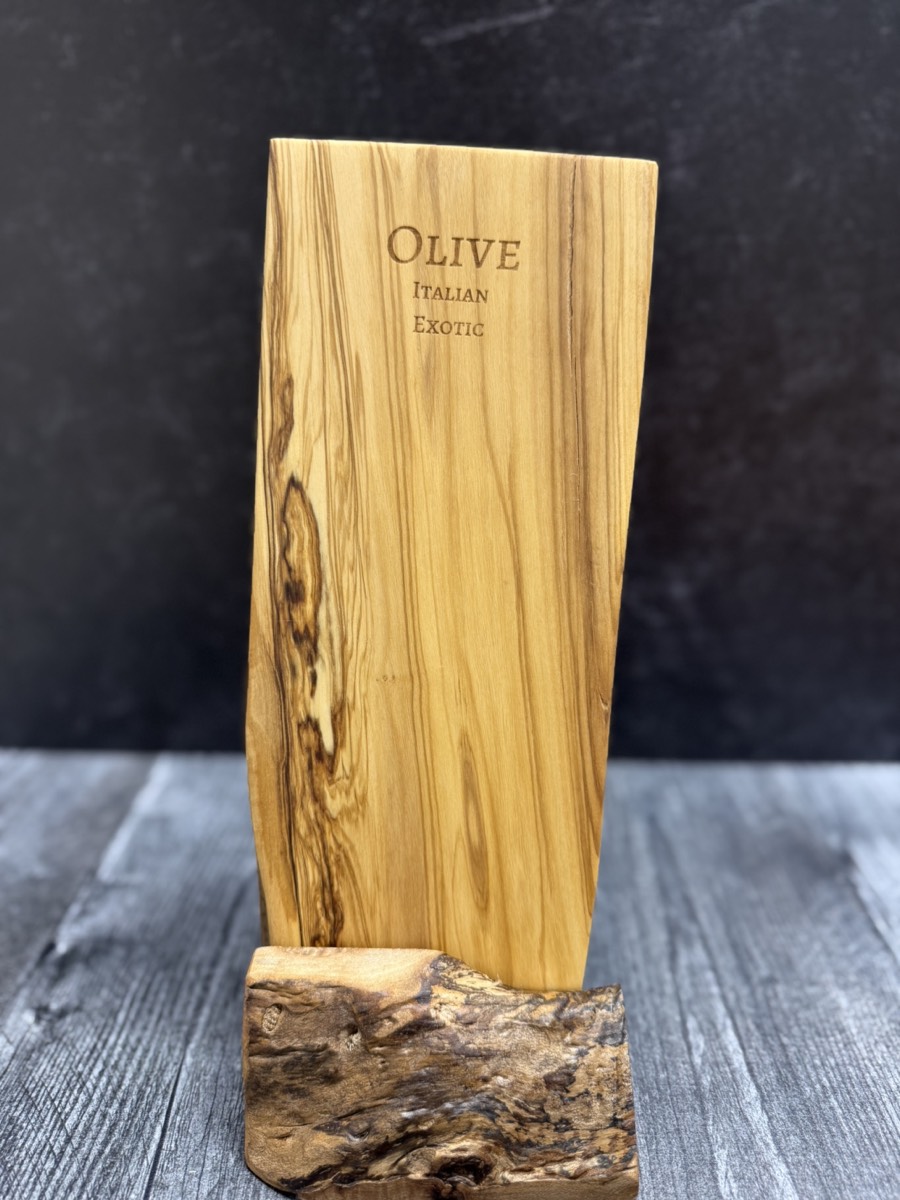
Olive specimen — Olea europaea
ExoticOlea europaea

Olive

Salvage from senile orchard trees. Sold in short, irregular blanks.

Olive (Olea europaea) is an exotic hardwood with a Janka hardness of 2,700 lbf. Its creamy yellow to olive-brown wood is shot through with dramatic dark, near-black streaks, and it is dense and fine-textured — prized for figure and usually sold in short, irregular blanks.

Category
Exotic
Janka
2,700 lbf
Botanical
Olea europaea
Shipped at
6–8% MC

Olea europaea Mediterranean orchard salvage · Mediterranean orchard salvage · Native to the Mediterranean Basin

Native to the Mediterranean Basin.

Sold mostly in short irregular blanks — that is just what the trees give you. Creamy yellow to olive-brown ground with dramatic dark brown to near-black streaks — flame, marble, cloud patterns.

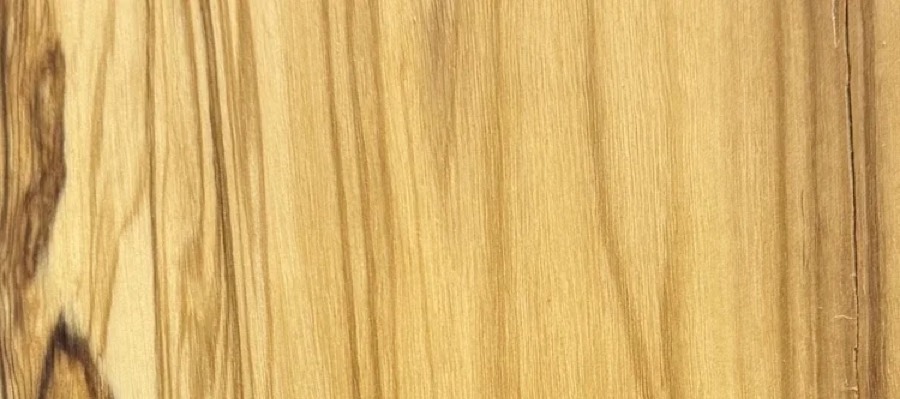
Detail of Olive grain — figured wood texture, photographed at Raw Heartwood
A close read on the grain. Detail of this specimen

What you see.

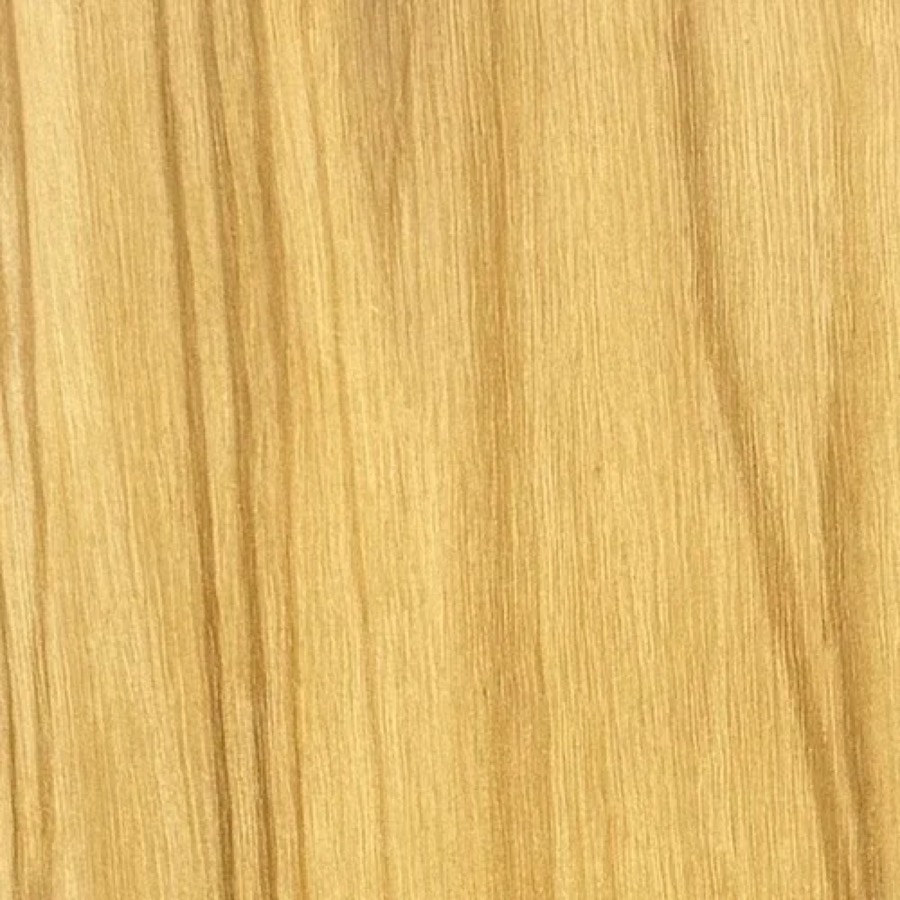
Creamy yellow to olive-brown ground with dramatic dark brown to near-black streaks — flame, marble, cloud patterns. Pale sapwood, not always sharply set off. Figure varies wildly tree to tree, board to board. Figure is the whole reason you buy it.

Heartwood color detail of Olive (Olea europaea)

Heartwood, this specimen

How the grain runs.

Interlocked, wild, or wavy — especially around the burls and forks common in old orchard trees. Fine, even texture. Polishes glassy.

Closer detail of Olive grain figure

Closer in

On the bench.

Heartwood durable against decay and insects. Sapwood is perishable. Old orchard wood is often partially spalted or punky — pick carefully. Hard. Hand work is demanding. Interlocked grain tears under planers — sharp blade, low cutting angle. Turns, carves, polishes exceptionally. Takes fine detail. Dries slow and prone to checking and distortion. Mostly sold as small blanks for that reason. Fruity, slightly sweet at the cut. Sometimes likened to the fruit. Fades with age. Documented respiratory and skin sensitizer in some workers. Dermatitis and asthma cases reported among professional turners. Dust extraction and skin protection.

The numbers, looked at directly.

Janka Hardness

0lbf

12,010 N. Side-hardness — force to embed a half-inch steel ball halfway into the wood.

Average Dried Weight

0lbs/ft³

990 kg/m³. At 12% MC.

Specific Gravity

0.80/ 0.99 at 12% MC

Basic over green volume; second number at 12% moisture content.

Hardness, in context
Pine 380 Cherry 950 Red Oak 1,220 H. Maple 1,450 Hickory 1,820 Jatoba 2,350 olive

A side-hardness measurement. Higher number, harder wood.

Shrinkage — radial / tangential / volumetric
5.4%radial
8.8%tangential
14.4%volumetric

On sourcing

Where this wood comes from matters.

Not on CITES. One of the most widely cultivated trees on earth. Supply is essentially all orchard salvage — low-impact byproduct. East African Olea capensis is sometimes substituted; tighter supply but also unlisted on CITES.

What it's for.

Worth knowing.

Sold mostly in short irregular blanks — that is just what the trees give you. If a supplier offers African "olivewood," confirm whether they mean orchard O. europaea or East African O. capensis. They look similar but trade and dimension differently.

Sources & references.

  1. Olive (Olea europaea) — Wikipedia contributors
  2. Olea europaea — IUCN Red List — Beech, E. (2018)
  3. Olive (Olea europaea) — The Wood Database
  4. Olea europaea — EUFORGEN Technical Guidelines
  5. Olea europaea — Plants of the World Online (Kew)
  6. Olive (Olea europaea) — FAO Non-Wood Forest Products

Common questions.

How hard is olive wood?
Olive has a very high Janka hardness of 2,700 lbf (a USDA Forest Products Laboratory value at 12% moisture content), which makes it dense and demanding to work by hand. Interlocked grain can tear under planers, so a sharp blade and a low cutting angle help; it turns, carves, and polishes exceptionally.
Why is olive sold in such small pieces?
Olive dries slowly and is prone to checking and distortion, and orchard trees yield short, irregular stock, so it is mostly sold as small blanks for turning and detail work rather than long boards.
What is olive used for, and where does it come from?
It suits turned objects, bowls, kitchen utensils, cutting boards, knife handles, and pen blanks. Olive is native to the Mediterranean Basin, and supply is essentially all orchard salvage — a low-impact byproduct. Raw Heartwood kiln-dries its lumber to 6-8% moisture content.

From the library to your bench

We mill, dry & sell Olive in West Chicago.

Tell us what you're building and we'll cut to order.

Request a slab or a cut →