
What you see.
Golden brown to medium yellow-brown off the saw. Darkens to a russet or reddish brown with age and light. Narrow pale yellow sapwood, sharp line. Planed surfaces sometimes show subtle chatoyance.

Heartwood, this specimen
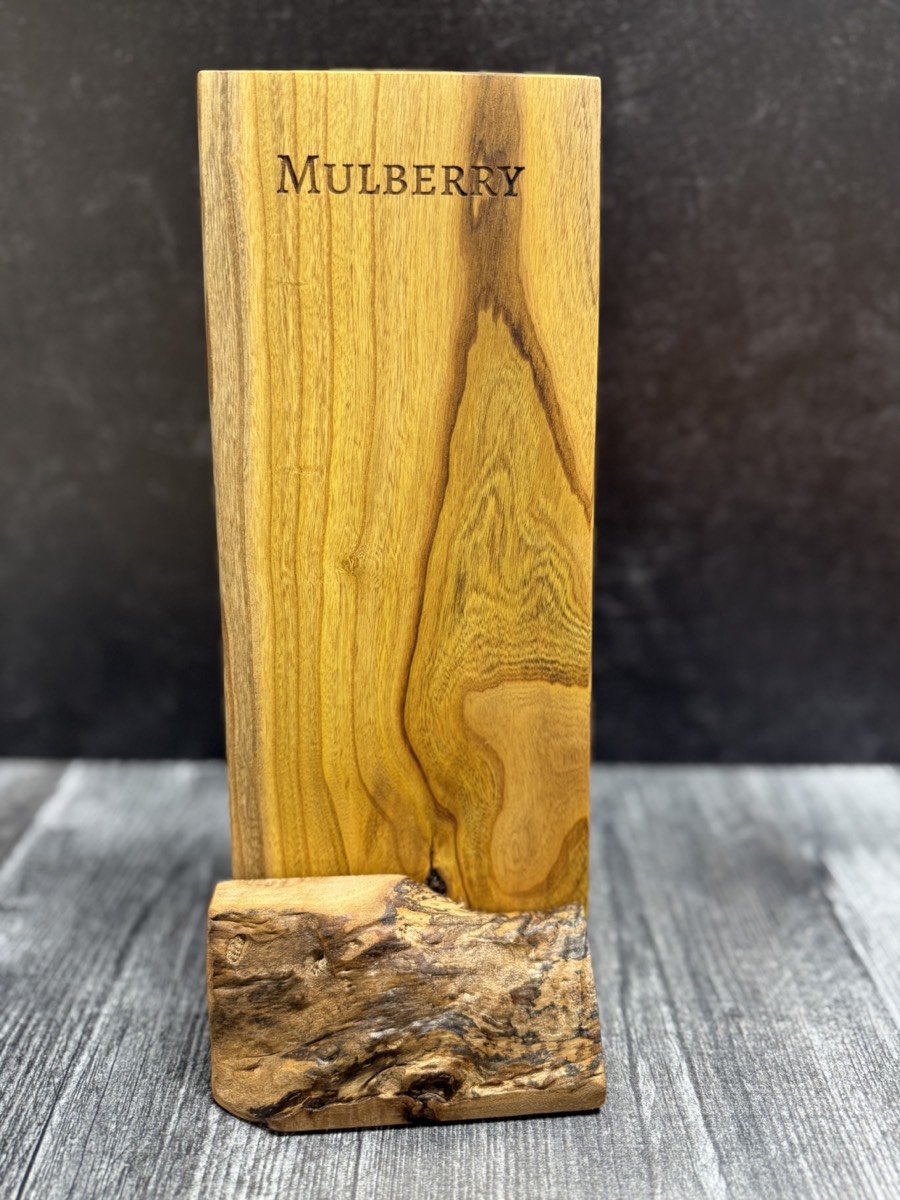
The outdoor-durable hardwood that nobody talks about.
Mulberry (Morus rubra) is a domestic hardwood from the eastern and central United States with a Janka hardness of 1680 lbf. It runs golden brown to medium yellow-brown off the saw, darkening to russet with age, and its heartwood is very durable in ground contact.
Morus rubra Red Mulberry · Red Mulberry · Eastern and central United States
Eastern and central United States.
Often confused with osage orange. Golden brown to medium yellow-brown off the saw.

Golden brown to medium yellow-brown off the saw. Darkens to a russet or reddish brown with age and light. Narrow pale yellow sapwood, sharp line. Planed surfaces sometimes show subtle chatoyance.
Heartwood, this specimen
Generally straight to slightly interlocked. Medium to coarse texture, good luster. Ring-porous — strong growth-ring contrast.
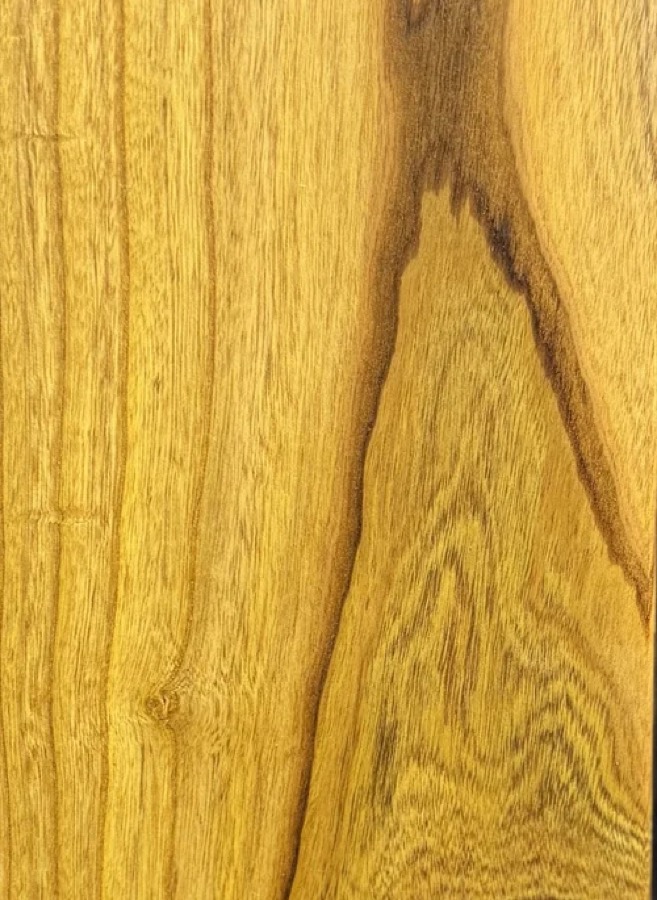
Closer in
Heartwood very durable to durable in ground contact. Holds up to decay fungi about like white oak or black locust. That is high company. Works well by hand or machine despite the hardness. Moderately blunting on cutters. Glues, turns, finishes well. Takes a high polish. No distinctive odor at the cut. Sawdust and bark have caused skin and respiratory reactions in some workers. The fresh material carries latex. Standard precautions plus a little extra if you are sensitive.
0lbf
7,470 N. Side-hardness — force to embed a half-inch steel ball halfway into the wood.
0lbs/ft³
720 kg/m³. At 12% MC.
0.59/ 0.72 at 12% MC
Basic over green volume; second number at 12% moisture content.
A side-hardness measurement. Higher number, harder wood.
On sourcing
Not on CITES. IUCN Least Concern. Widespread but not commercial-scale. Comes through specialty channels.
Often confused with osage orange. Both yellow on exposure, both brown out. Mulberry is lighter and softer. White Mulberry (M. alba), the naturalized Asian one, runs a touch denser but otherwise behaves the same.
From the library to your bench
Tell us what you're building and we'll cut to order.
Request a slab or a cut →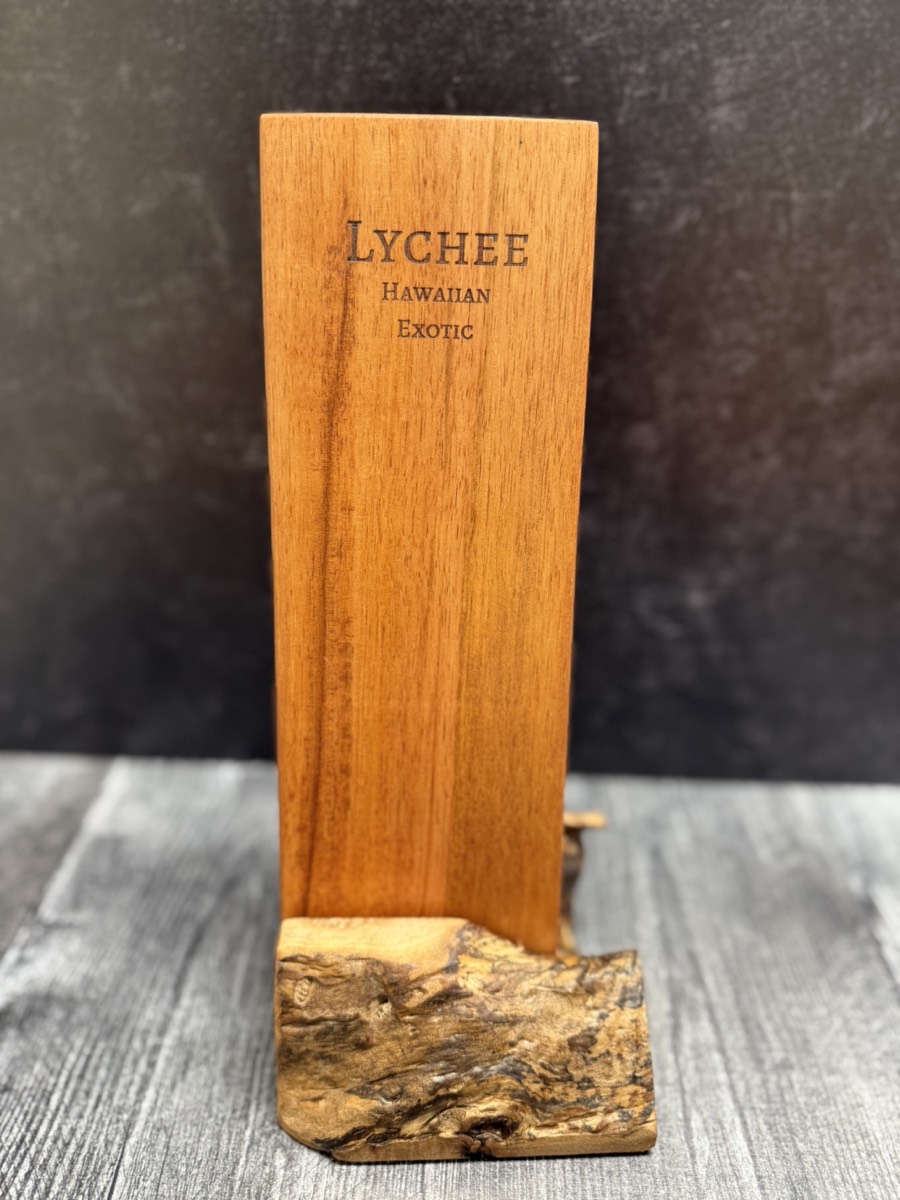
Litchi chinensis
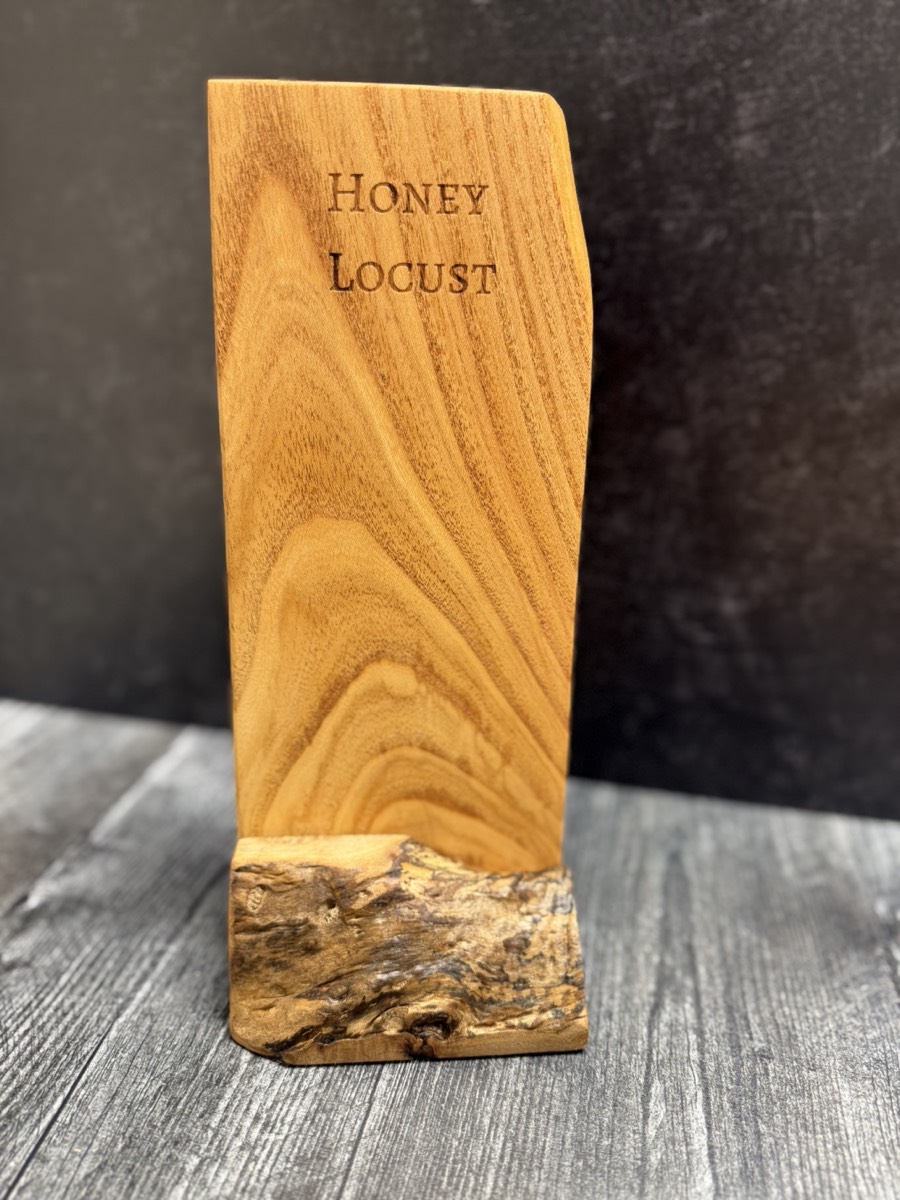
Gleditsia triacanthos
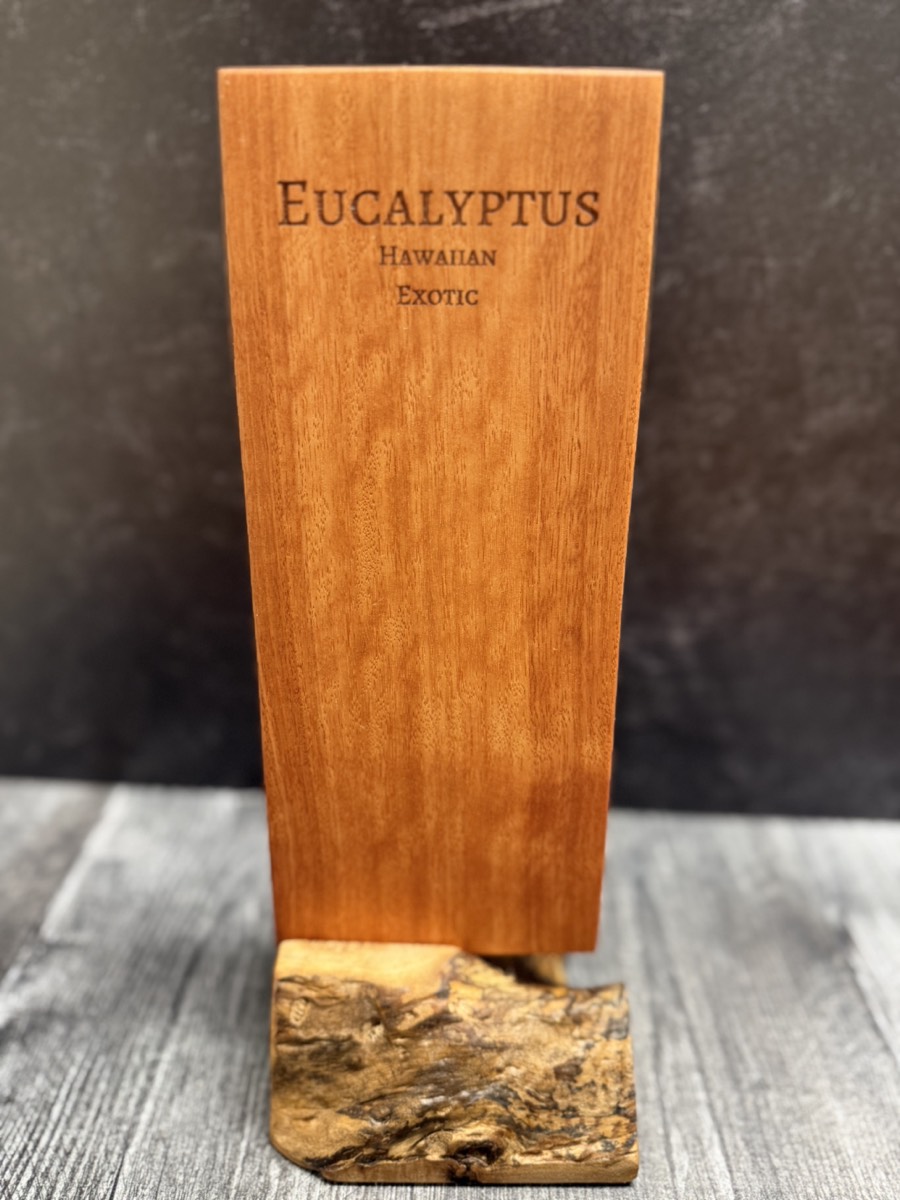
Eucalyptus globulus
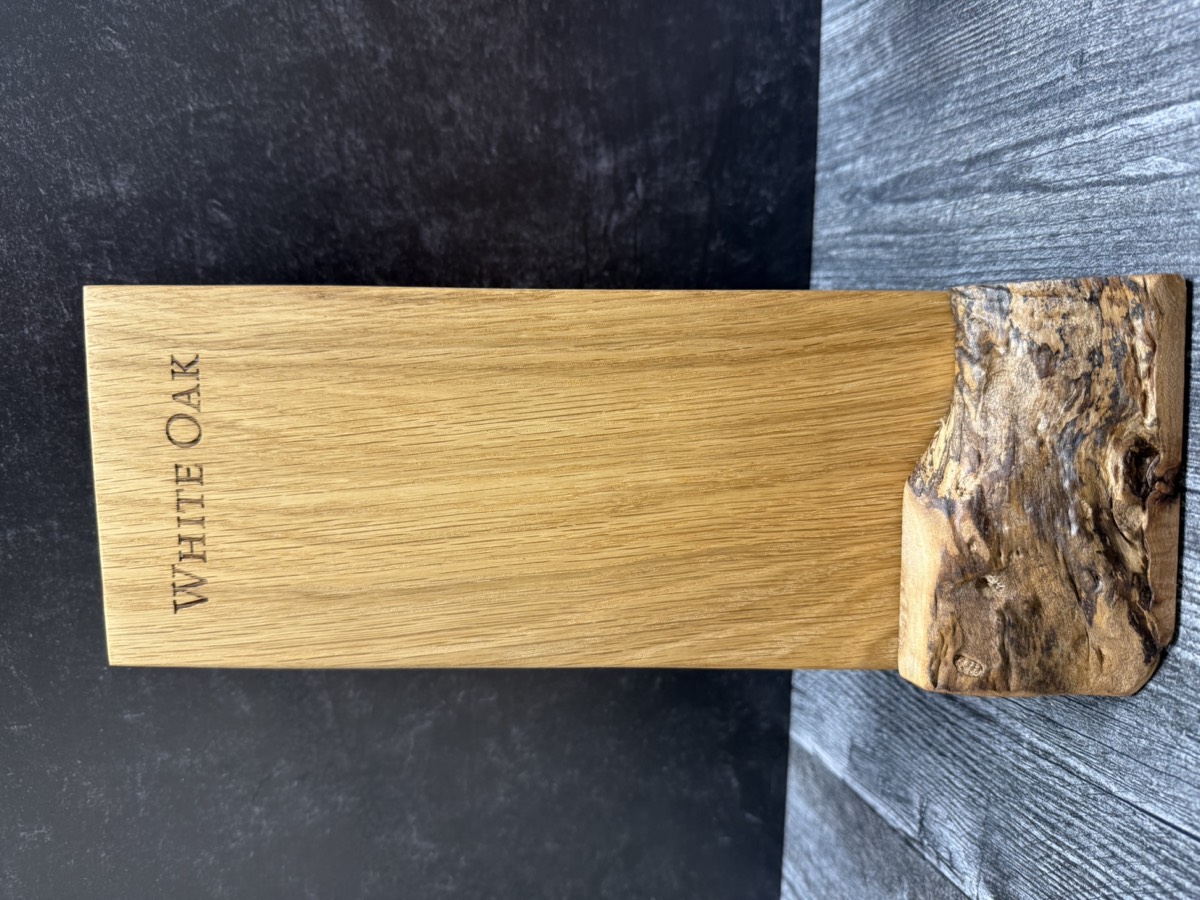
Quercus alba