
What you see.
Heartwood warm reddish brown to russet, with darker streaks and pinkish or salmon zones near the pith. Pale cream sapwood, sharp line. Deepens under UV into a uniform mahogany tone.
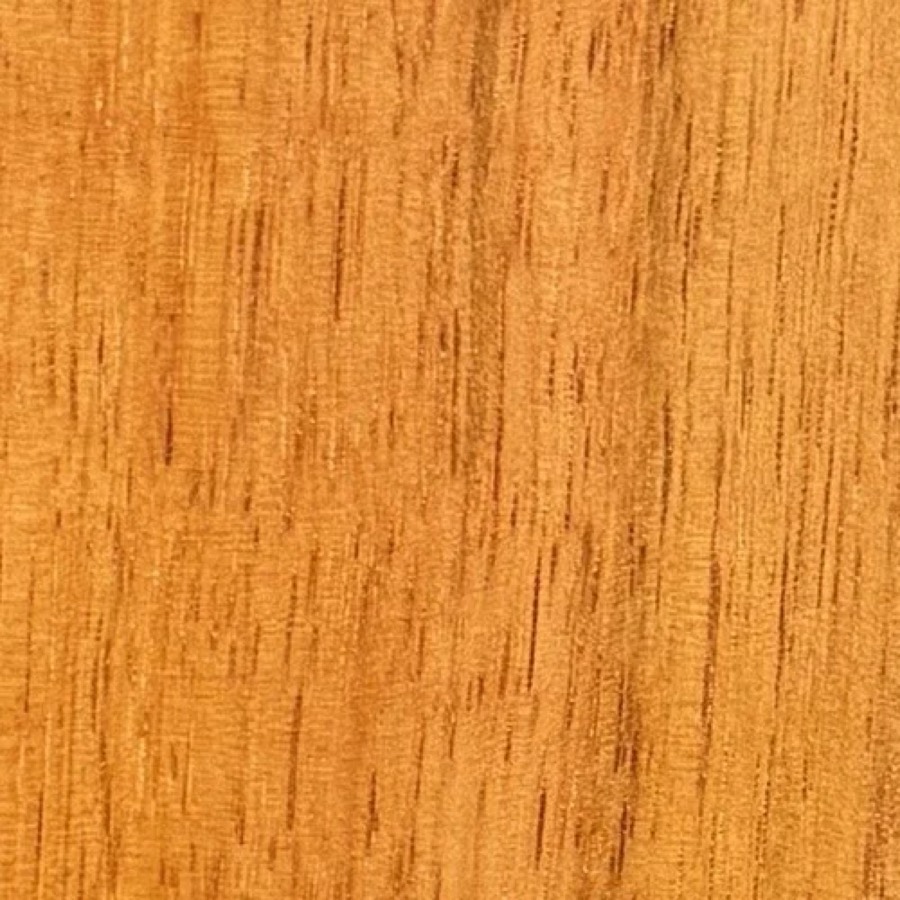
Heartwood, this specimen
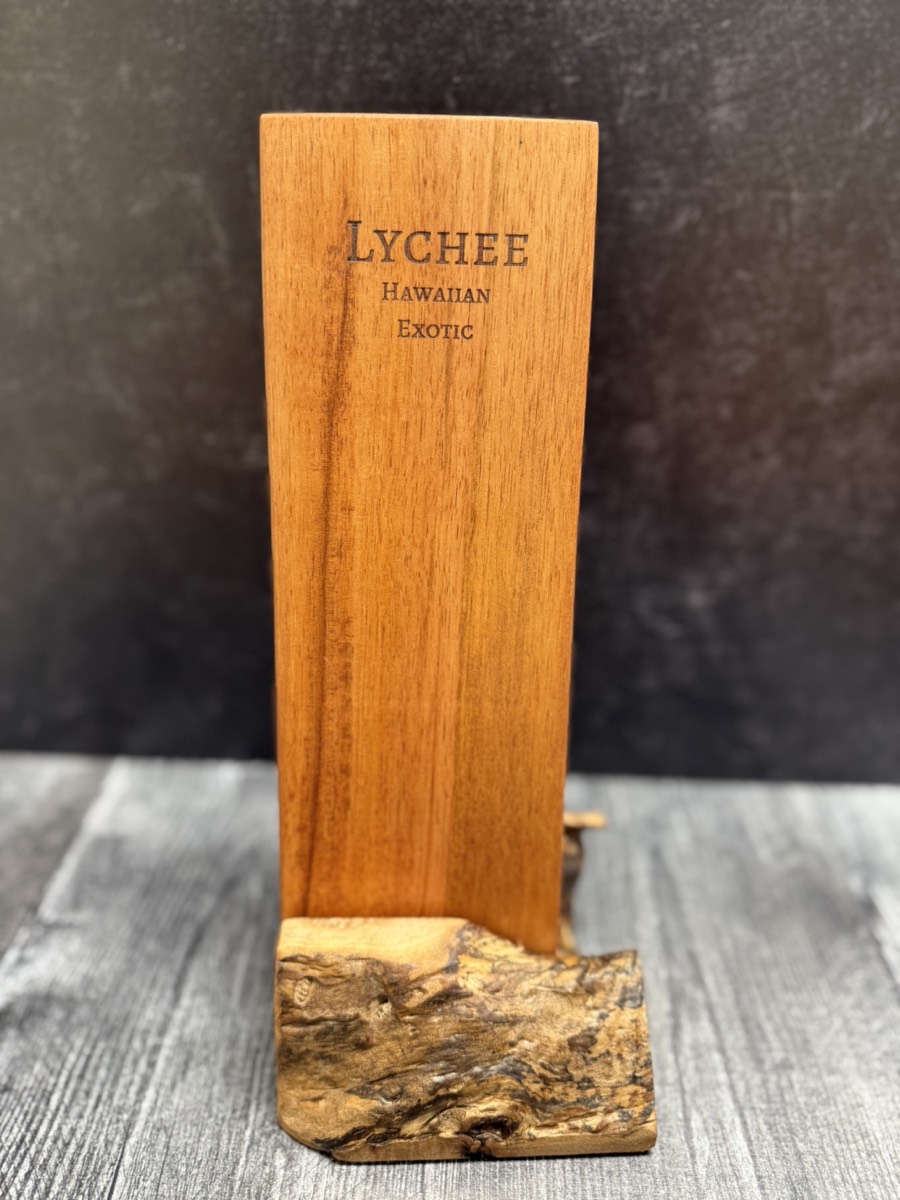
Orchard salvage. Not a production timber. Burl and crotch sections carry the figure.
Lychee (Litchi chinensis) is an exotic hardwood with a Janka hardness of 1690 lbf. Its heartwood is a warm reddish brown to russet with darker streaks and pinkish zones near the pith, and its grain runs interlocked or wavy from the tree's branching habit.
Litchi chinensis Orchard salvage · Orchard salvage · Native to southern China (Guangdong
Native to southern China (Guangdong.
Niche craft wood, not a production timber. Heartwood warm reddish brown to russet, with darker streaks and pinkish or salmon zones near the pith.
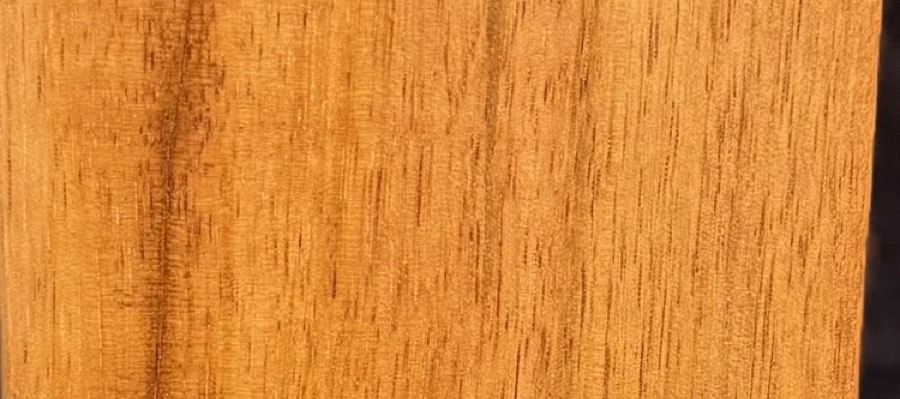
Heartwood warm reddish brown to russet, with darker streaks and pinkish or salmon zones near the pith. Pale cream sapwood, sharp line. Deepens under UV into a uniform mahogany tone.
Heartwood, this specimen
Interlocked or wavy from the branching habit. Irregular figure on flatsawn faces. Medium texture, natural luster under finish.
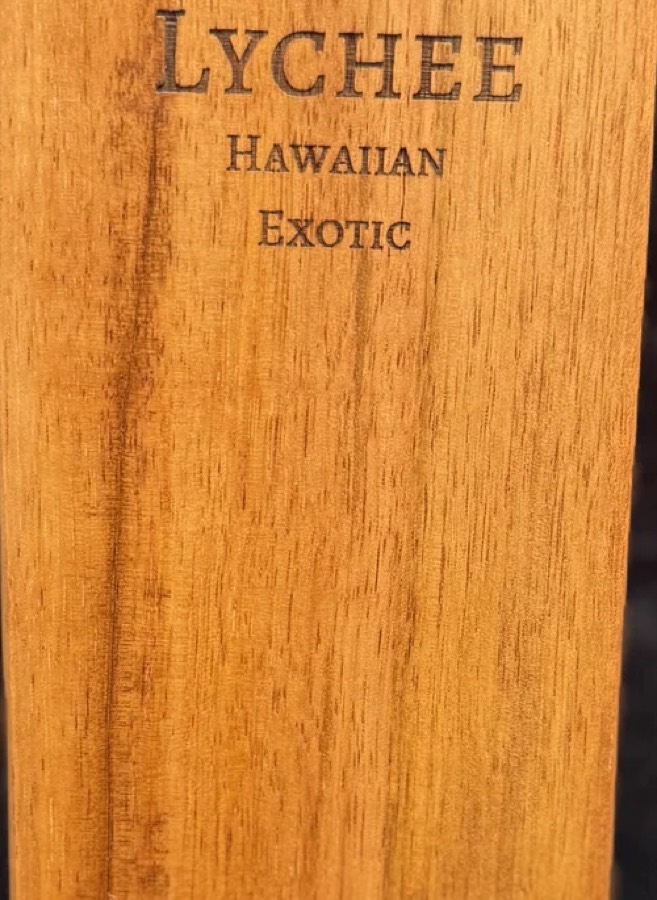
Closer in
Heartwood moderately durable. Small orchard logs come with end-checks and fungal staining. Sapwood is non-durable — powderpost beetles especially. Dense and interlocked, so hand work is demanding and figured stock tears under planers. Turns and finishes well, takes a high polish, glues with proper prep. None when dry. No widely reported reactions. Fine dust can irritate the lungs like any dense tropical hardwood. Standard PPE.
0lbf
7,520 N. Side-hardness — force to embed a half-inch steel ball halfway into the wood.
0lbs/ft³
835 kg/m³. At 12% MC.
0.70/ 0.83 at 12% MC
Basic over green volume; second number at 12% moisture content.
A side-hardness measurement. Higher number, harder wood.
On sourcing
Not on CITES. Not on the IUCN Red List. Lumber is almost entirely orchard salvage from senile or storm-damaged fruit trees. Low-impact byproduct material. Supply is irregular and small.
Niche craft wood, not a production timber. Logs run short and crooked with plenty of defect. Burl and crotch sections can carry exceptional figure when you find them.
From the library to your bench
Tell us what you're building and we'll cut to order.
Request a slab or a cut →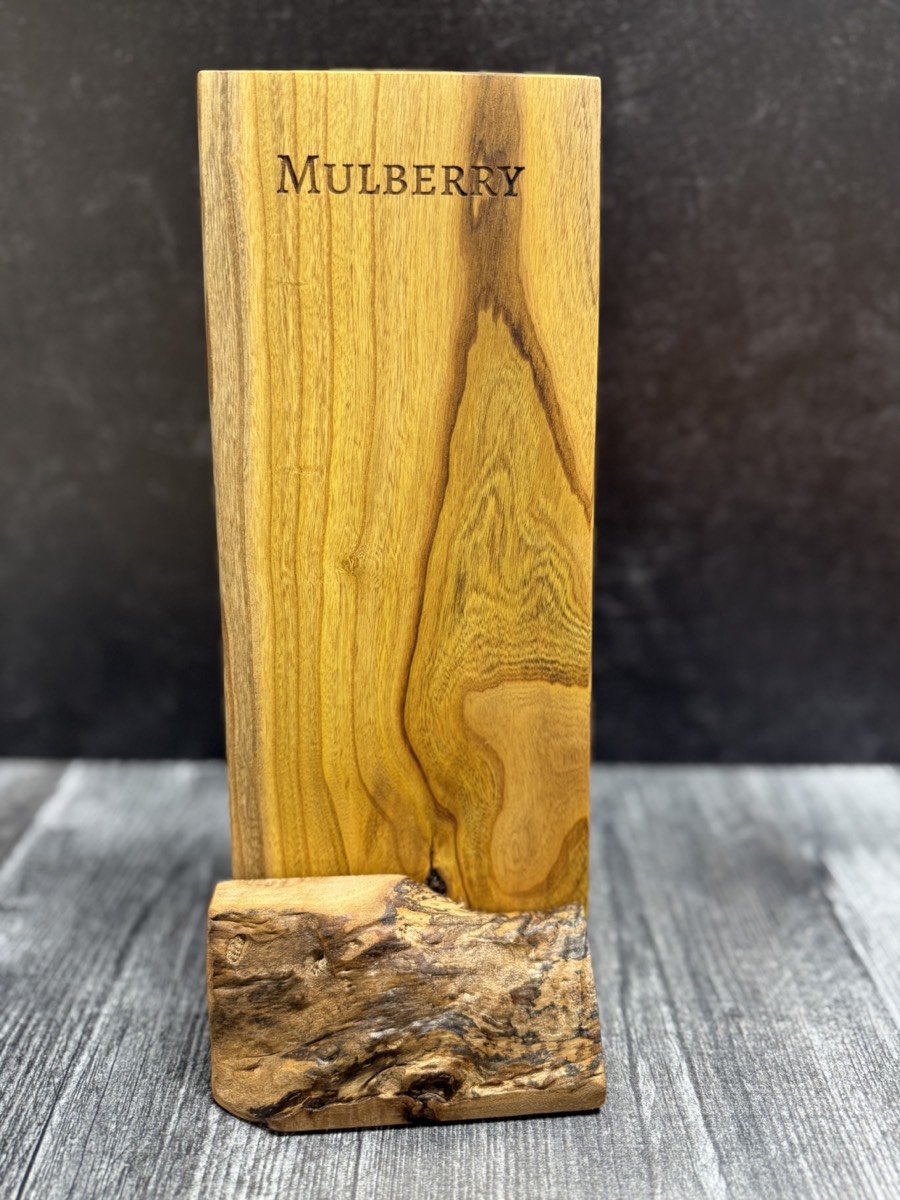
Morus rubra
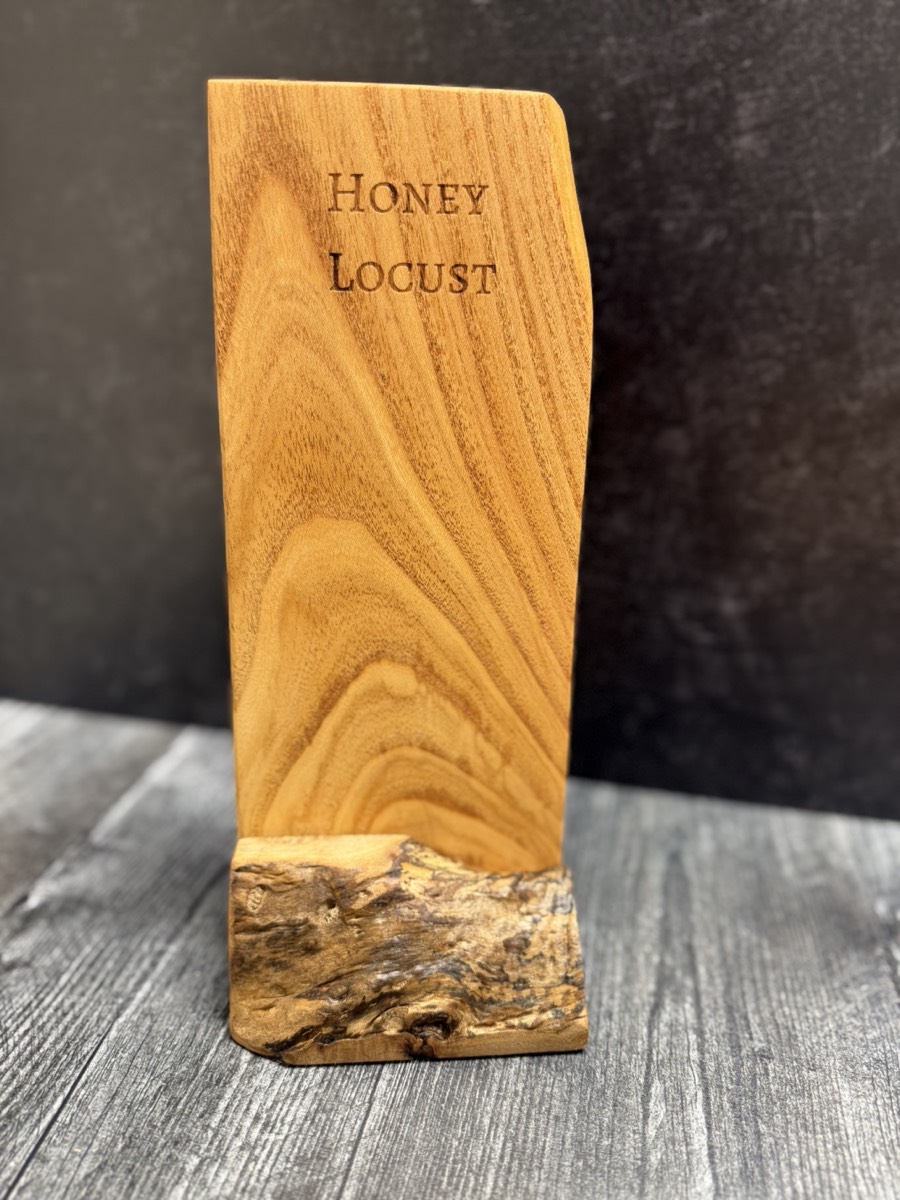
Gleditsia triacanthos
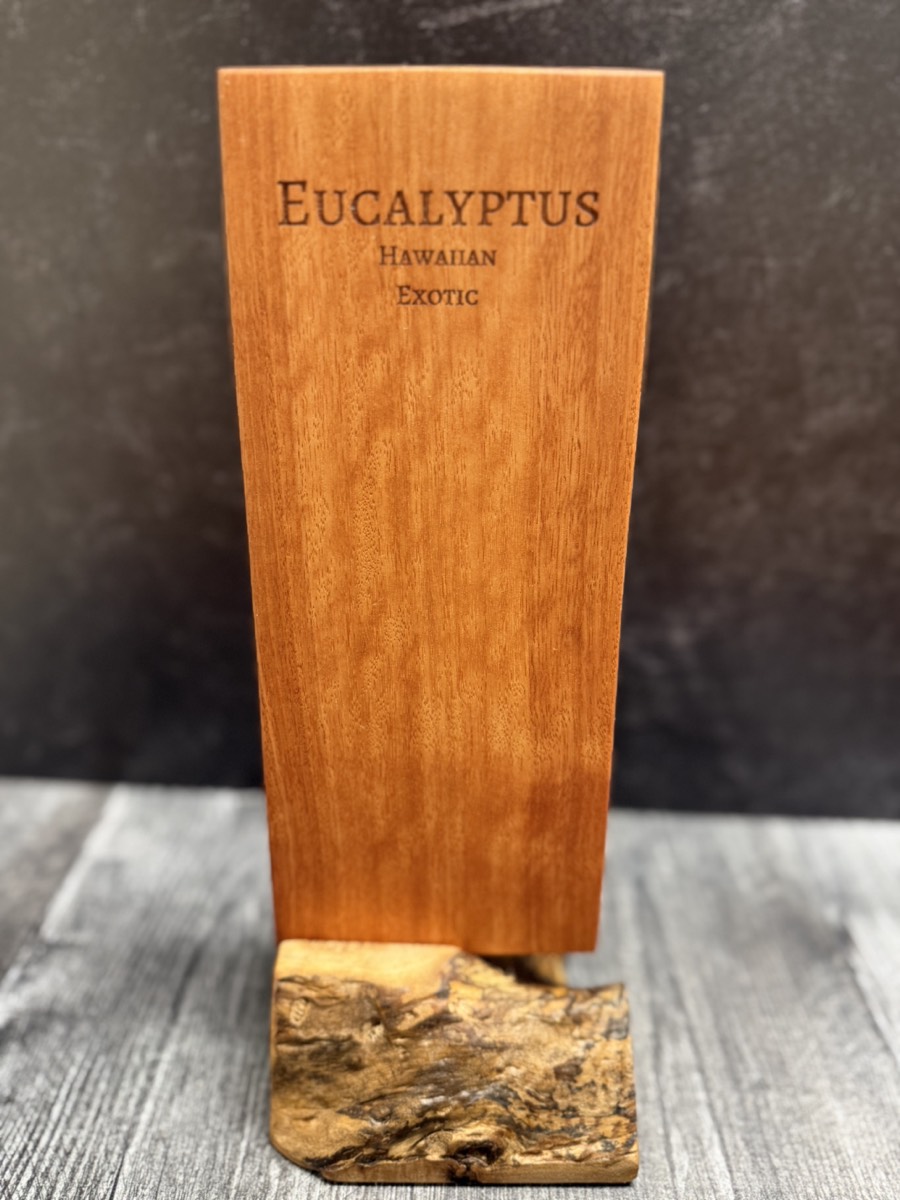
Eucalyptus globulus
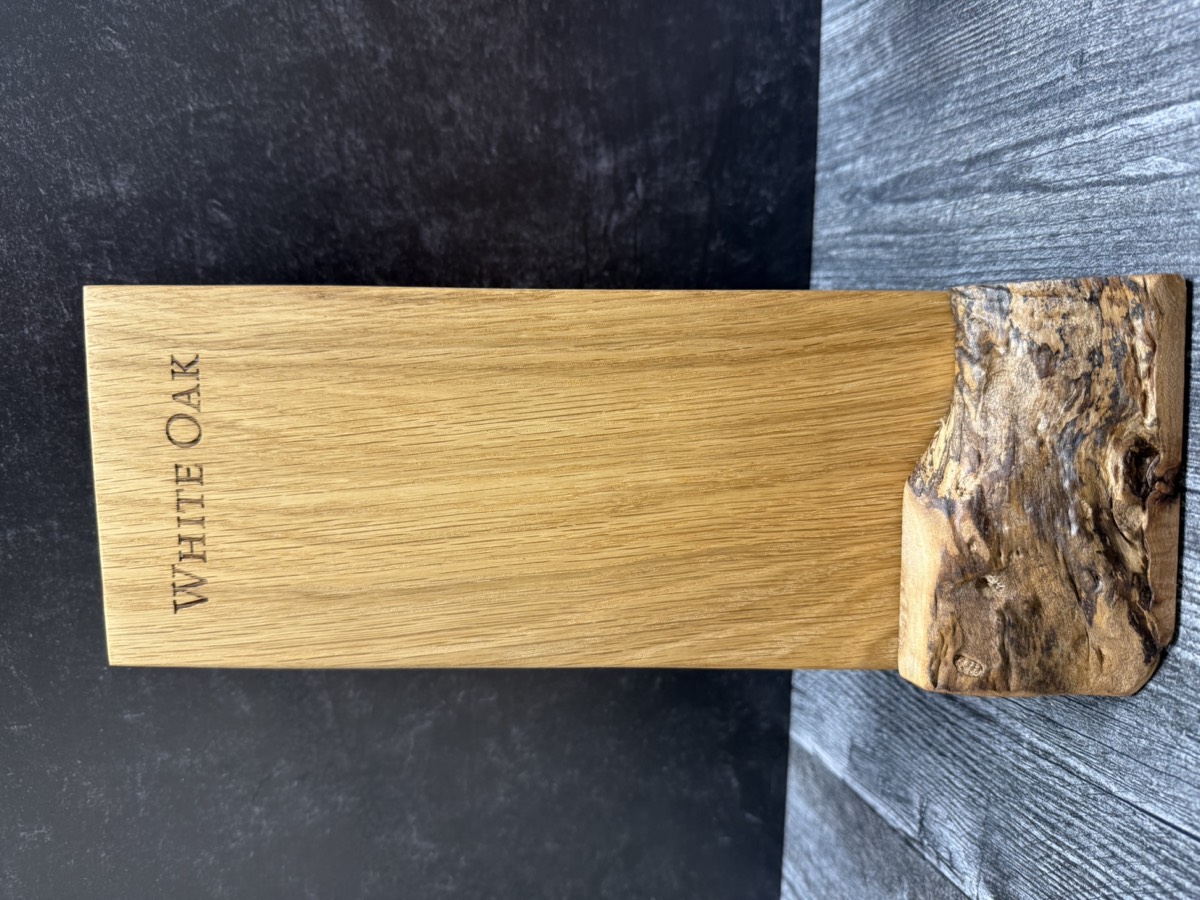
Quercus alba