
What you see.
Pale cream to light yellow-tan ground, dense clusters of small dark brown to black eyes — dormant bud traces. The contrast is the whole look. Often bleached or dyed to push the effect.
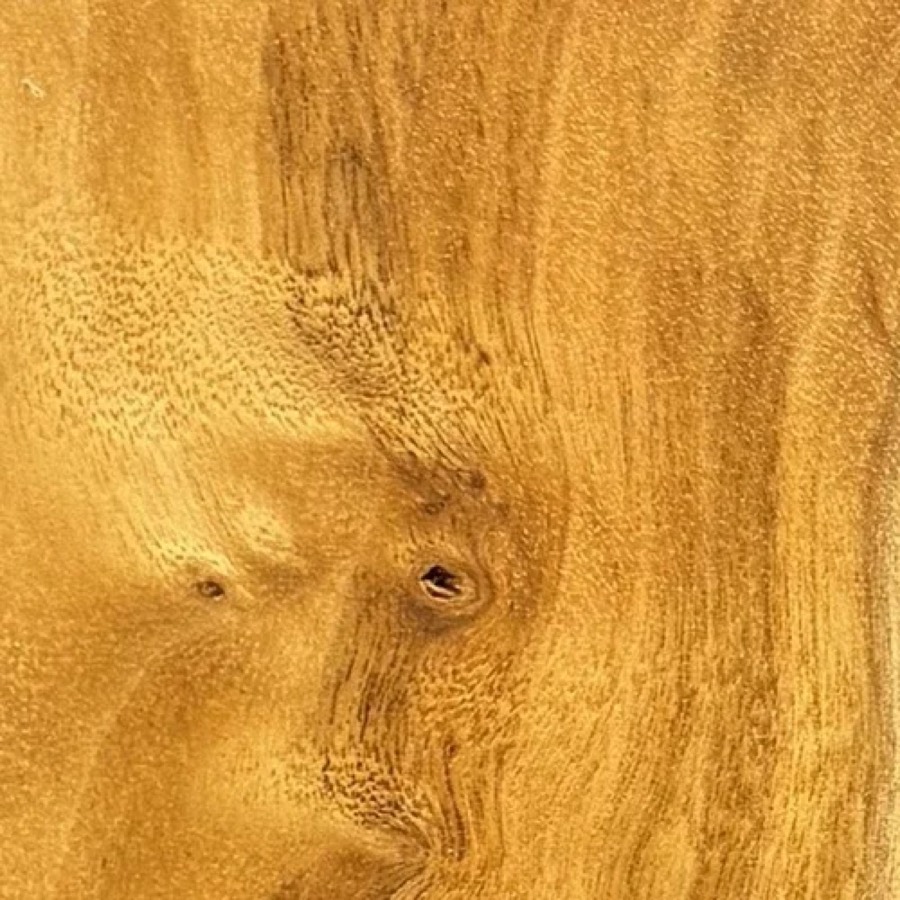
Heartwood, this specimen
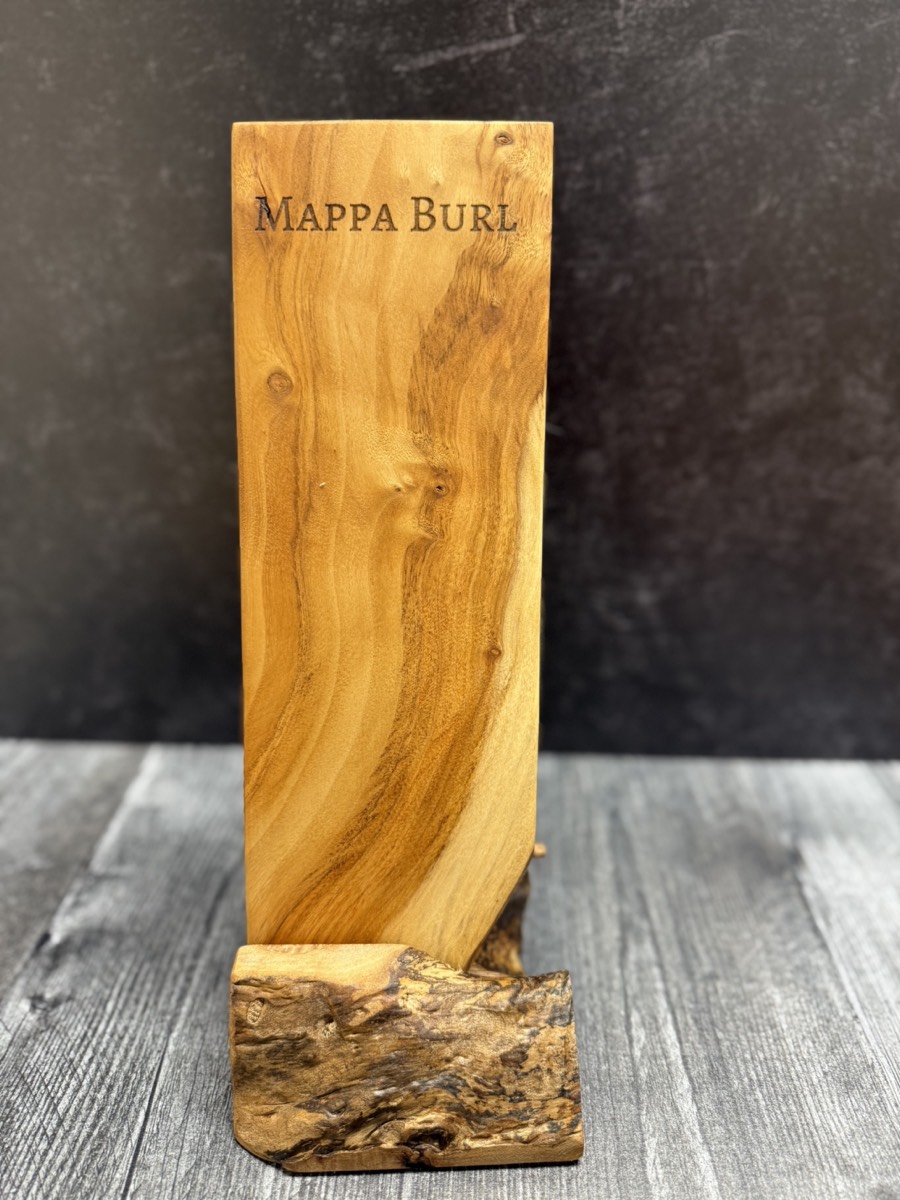
Not a species. A growth abnormality on European poplar.
Mappa Burl (Populus alba) is an exotic hardwood burl with a Janka hardness of 410 lbf. It shows a pale cream to yellow-tan ground dotted with dense clusters of small dark brown to black eyes, and like all poplar it is non-durable, decorative interior material.
Populus alba (also P. nigra) European Poplar Burl · European Poplar Burl · Native across Europe
Native across Europe.
Burl is a growth abnormality, not a species. Pale cream to light yellow-tan ground, dense clusters of small dark brown to black eyes — dormant bud traces.

Pale cream to light yellow-tan ground, dense clusters of small dark brown to black eyes — dormant bud traces. The contrast is the whole look. Often bleached or dyed to push the effect.
Heartwood, this specimen
Wildly irregular. Swirled and contorted around the bud clusters. Fine even texture in the clear field, punky and porous around the eyes — usually wants resin to stabilize.
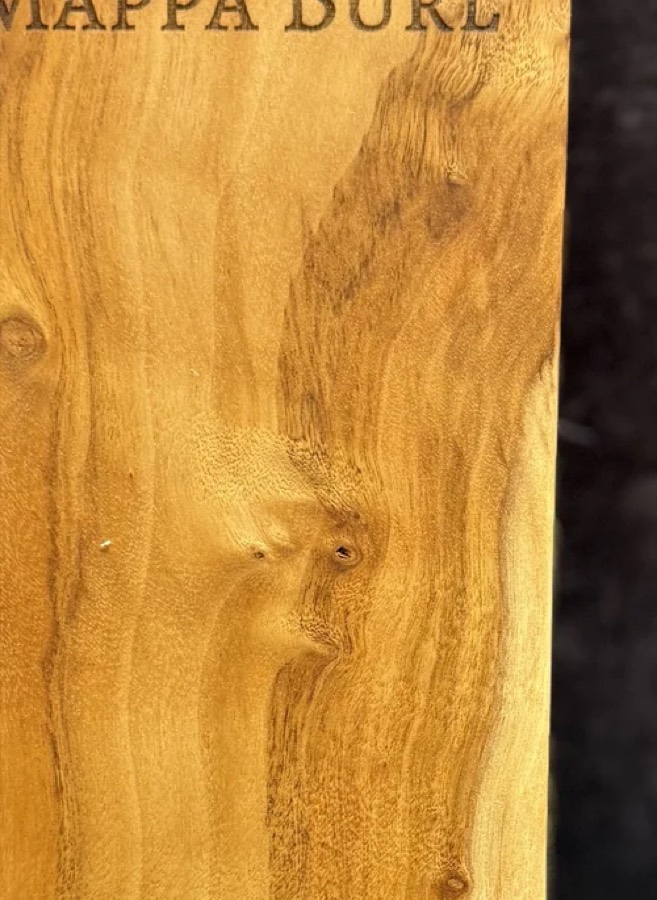
Closer in
Poplar in any form is non-durable. Decorative interior material, period. Stabilized burl machines and turns clean. Raw burl carries voids, bark inclusions, soft spots that need fill. Sands to a glassy surface. Takes dye and stain readily because the structure is open. None. Poplar runs low-risk. Airborne dust can trigger respiratory irritation, occasionally dermatitis. Dust mask.
0lbf
1,820 N. Side-hardness — force to embed a half-inch steel ball halfway into the wood.
0lbs/ft³
450 kg/m³. At 12% MC.
0.36/ 0.45 at 12% MC
Basic over green volume; second number at 12% moisture content.
A side-hardness measurement. Higher number, harder wood.
On sourcing
Neither Populus alba nor P. nigra is on CITES. Both are abundant and fast-growing. P. nigra is locally declining in parts of Europe due to hybridization and habitat loss, but supply is not constrained. Burl is salvage from individual harvested trees.
Burl is a growth abnormality, not a species. "Mappa" is a trade name covering burl from European white poplar (Populus alba) and to a lesser extent black poplar (P. nigra). Mechanical specs above reflect the parent tree — burl tissue is irregular and not characterized by standard testing. Ask which species your supplier means.
From the library to your bench
Tell us what you're building and we'll cut to order.
Request a slab or a cut →
Cocos nucifera
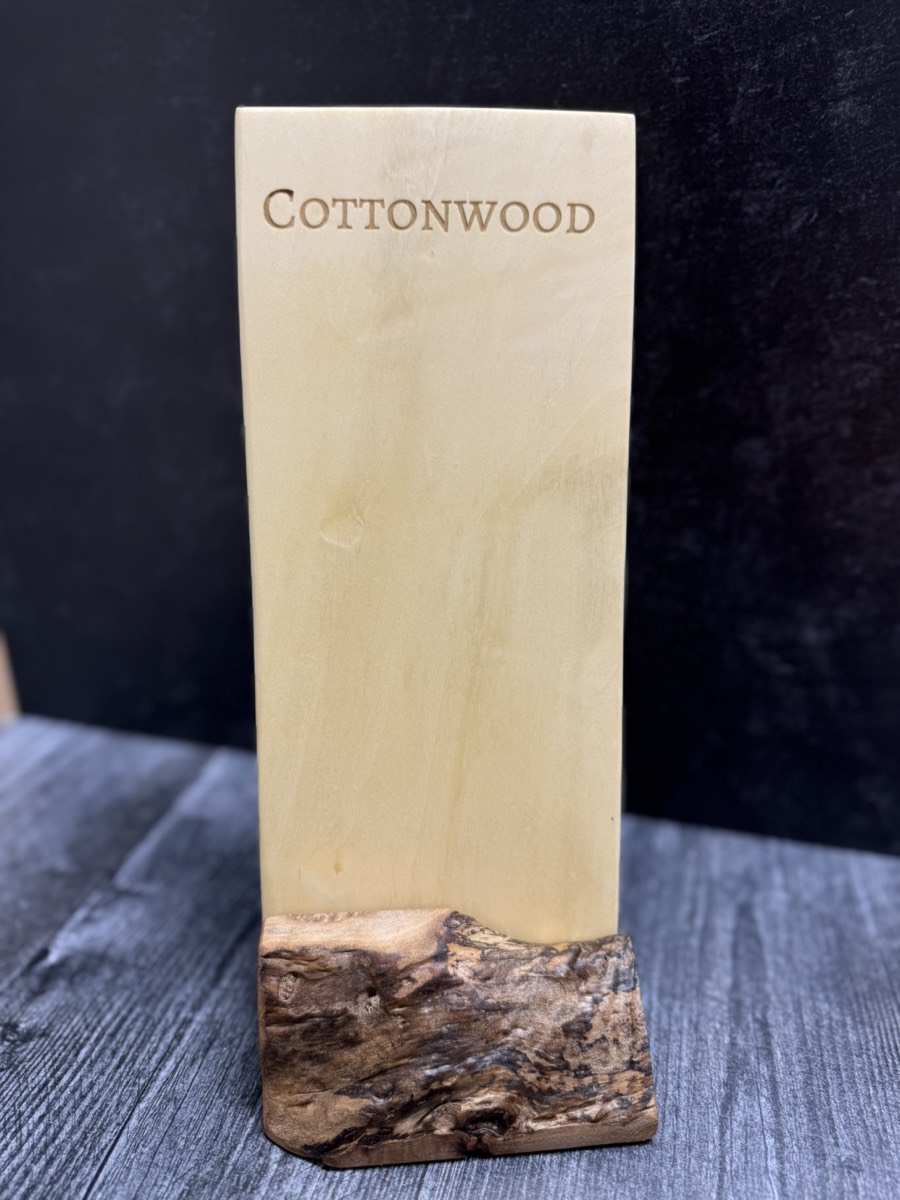
Populus deltoides
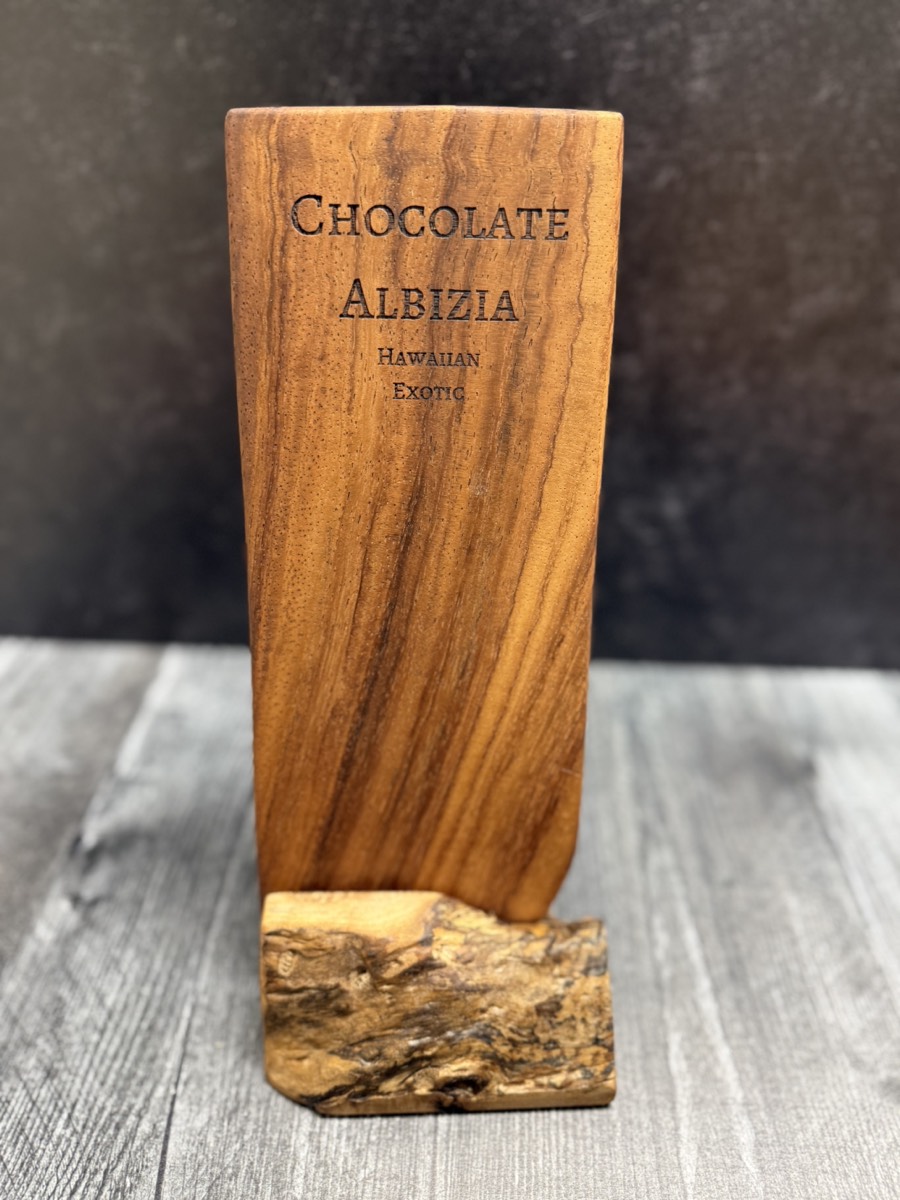
Falcataria moluccana
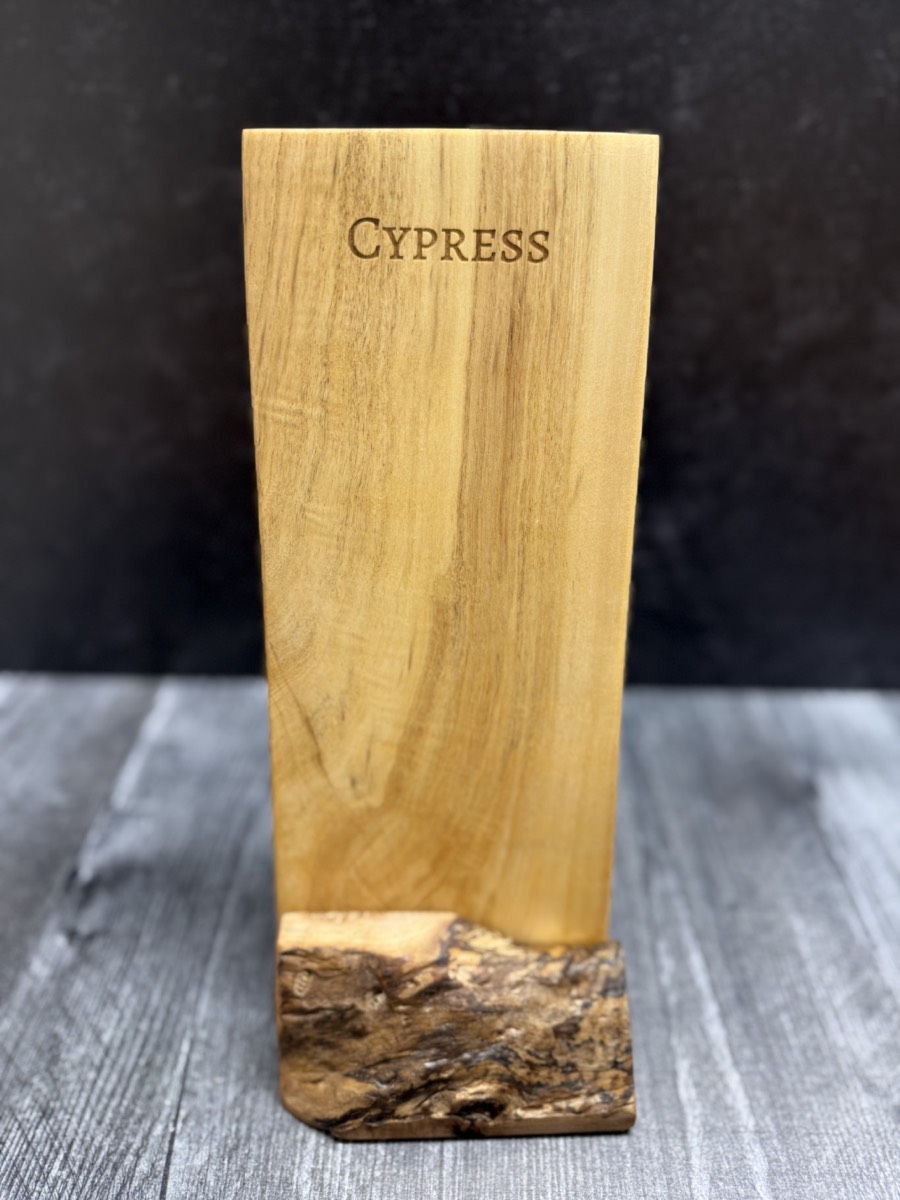
Taxodium distichum