Raw HeartwoodXylarium
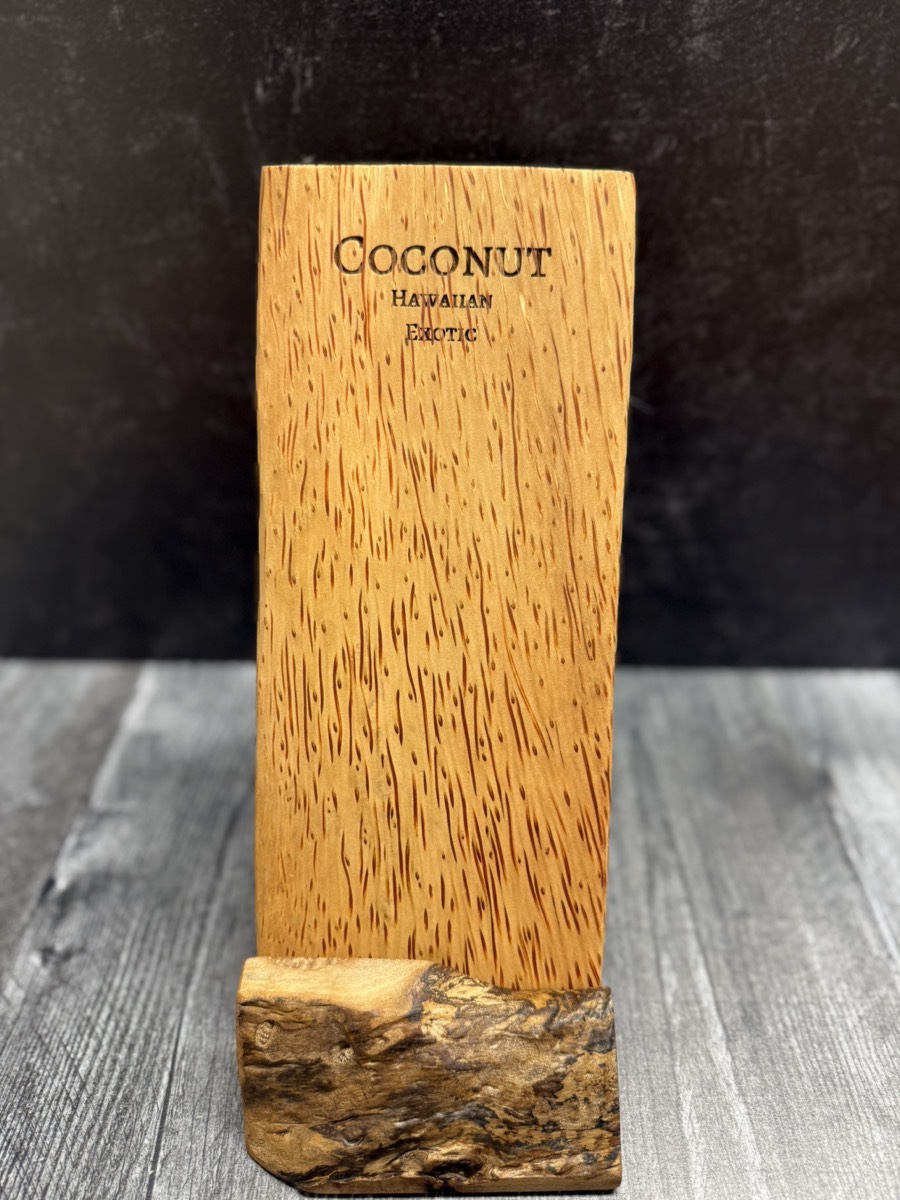
Coconut specimen — Cocos nucifera
ExoticCocos nucifera

Coconut

Monocot. Not a true wood. Density swings 4× across the trunk.

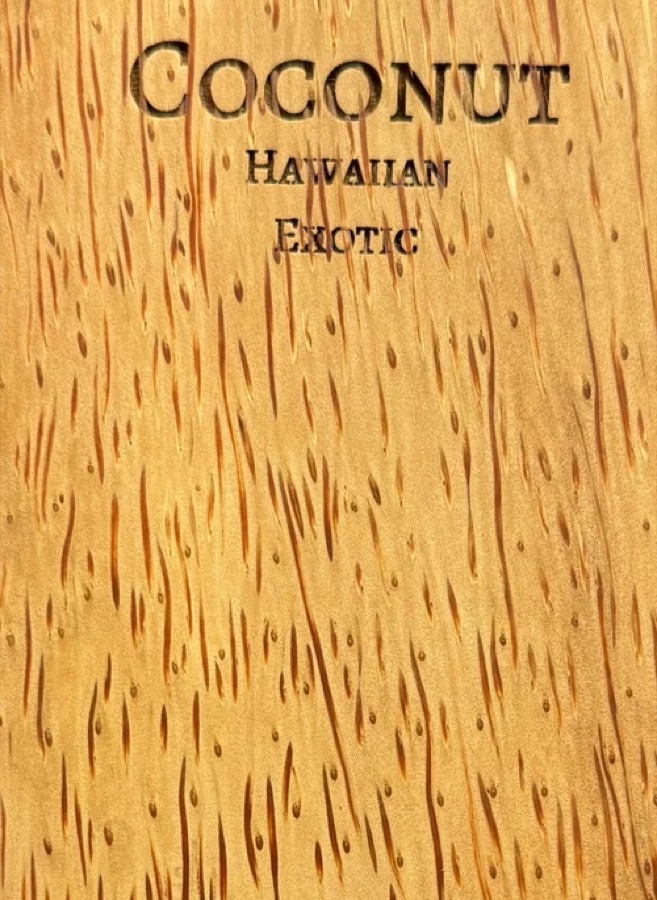
Coconut (Cocos nucifera) is an exotic palm wood (a monocot, not a true hardwood) with a Janka hardness of 400 lbf. Its pale tan to golden-brown ground is shot through with darker brown to near-black vascular fibers in a pronounced fleck or starburst pattern.

Category
Exotic
Janka
400 lbf
Botanical
Cocos nucifera
Shipped at
6–8% MC

Cocos nucifera Palm wood (monocot) · Palm wood (monocot) · Pantropical; exact native range debated but believed to originate in the Indo-Pacific

Pantropical; exact native range debated but believed to originate in the Indo-Pacific.

Monocot. Pale tan to golden brown ground, shot through with darker brown to near-black vascular fibers.

Detail of Coconut grain — figured wood texture, photographed at Raw Heartwood
A close read on the grain. Detail of this specimen

What you see.

Pale tan to golden brown ground, shot through with darker brown to near-black vascular fibers. Pronounced fleck or starburst pattern. Outer zone is darker and tighter, core is paler and softer. Looks nothing like a normal hardwood.
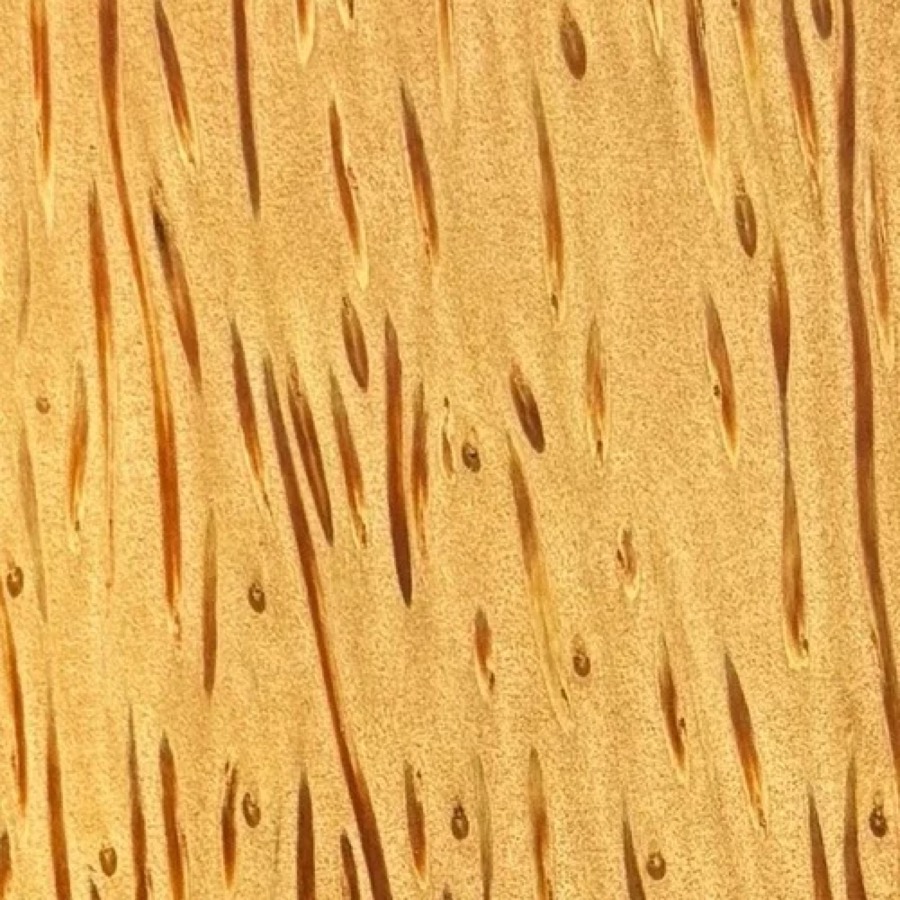
Heartwood color detail of Coconut (Cocos nucifera)

Heartwood, this specimen

How the grain runs.

No rings. No rays. No grain in the usual sense. Vascular bundles run the length of the trunk through soft parenchyma. Coarse, fibrous, uneven.

Closer detail of Coconut grain figure

Closer in

On the bench.

Dense outer zone is moderately durable. Inner zones are not. Powderpost beetles like the starchy core. The density gradient and silica content eat steel. Run carbide. Slow, sharp cuts to keep fibers from pulling. Sands to a striking finish. Glues fine on the dense outer material. None when dry. Nothing notable chemically. The silica fiber dust is mechanically rough on lungs and eyes — respirator on.

The numbers, looked at directly.

Janka Hardness

0lbf

1,780–8,000 N. Side-hardness — force to embed a half-inch steel ball halfway into the wood.

Average Dried Weight

0lbs/ft³

190–960 kg/m³. At 12% MC.

Specific Gravity

0.20–0.85 across trunk/ 0.75–0.85 (high-density grade) at 12% MC

Basic over green volume; second number at 12% moisture content.

Hardness, in context
Pine 380 Cherry 950 Red Oak 1,220 H. Maple 1,450 Hickory 1,820 Jatoba 2,350 coconut

A side-hardness measurement. Higher number, harder wood.

Shrinkage — radial / tangential / volumetric
3–6%radial
6–10%tangential
10–18%volumetric

On sourcing

Where this wood comes from matters.

Not on CITES. Not on the IUCN Red List. Commercial palmwood comes from senile palms past their fruit-bearing life — sixty to eighty years old. Salvage product, low impact.

What it's for.

Worth knowing.

Monocot. Not a true wood. No cambium, no sapwood-heartwood distinction. Density and shrinkage swing wildly across the trunk, so any single spec is a generalization. In Hawaii (niu) it is a canoe plant, traditionally significant for food, fiber, and ceremony.

Sources & references.

  1. Coconut (Cocos nucifera) — Wikipedia contributors
  2. Coconut Palm (Cocos nucifera) — The Wood Database
  3. Coconut wood: Processing and use — FAO Forestry Paper 57 — Killmann, W.; Fink, D. (1996)
  4. Cocos nucifera — IUCN Red List — Johnson, D.V. (2017)
  5. Cocos nucifera (coconut) — Species Profiles for Pacific Island Agroforestry — Chan, E.; Elevitch, C.R. (2006)
  6. Coconut palm in Hawaii — CTAHR, University of Hawaii at Manoa

Common questions.

How hard is coconut wood and how does its density vary?
Coconut palm has a Janka hardness of 400 lbf (a USDA Forest Products Laboratory reference value at 12% moisture content). Because it is a monocot rather than a true wood, density swings widely across the trunk: the outer zone is darker, tighter, and harder, while the core is paler and softer, so any single spec is a generalization.
Is coconut wood suitable for outdoor use?
Only partially. The dense outer zone is moderately durable, but the inner zones are not, and powderpost beetles favor the starchy core. It is better suited to interior work such as flooring, decorative paneling, and turned bowls than to exposed outdoor applications.
What should I know about working coconut wood on the bench?
Its density gradient and silica content are hard on steel, so use carbide tooling with slow, sharp cuts to keep the fibers from pulling, and it sands to a striking finish. The silica-laden dust is mechanically rough on lungs and eyes, so wear a respirator. Glue holds on the dense outer material.

From the library to your bench

We mill, dry & sell Coconut in West Chicago.

Tell us what you're building and we'll cut to order.

Request a slab or a cut →