Raw HeartwoodXylarium
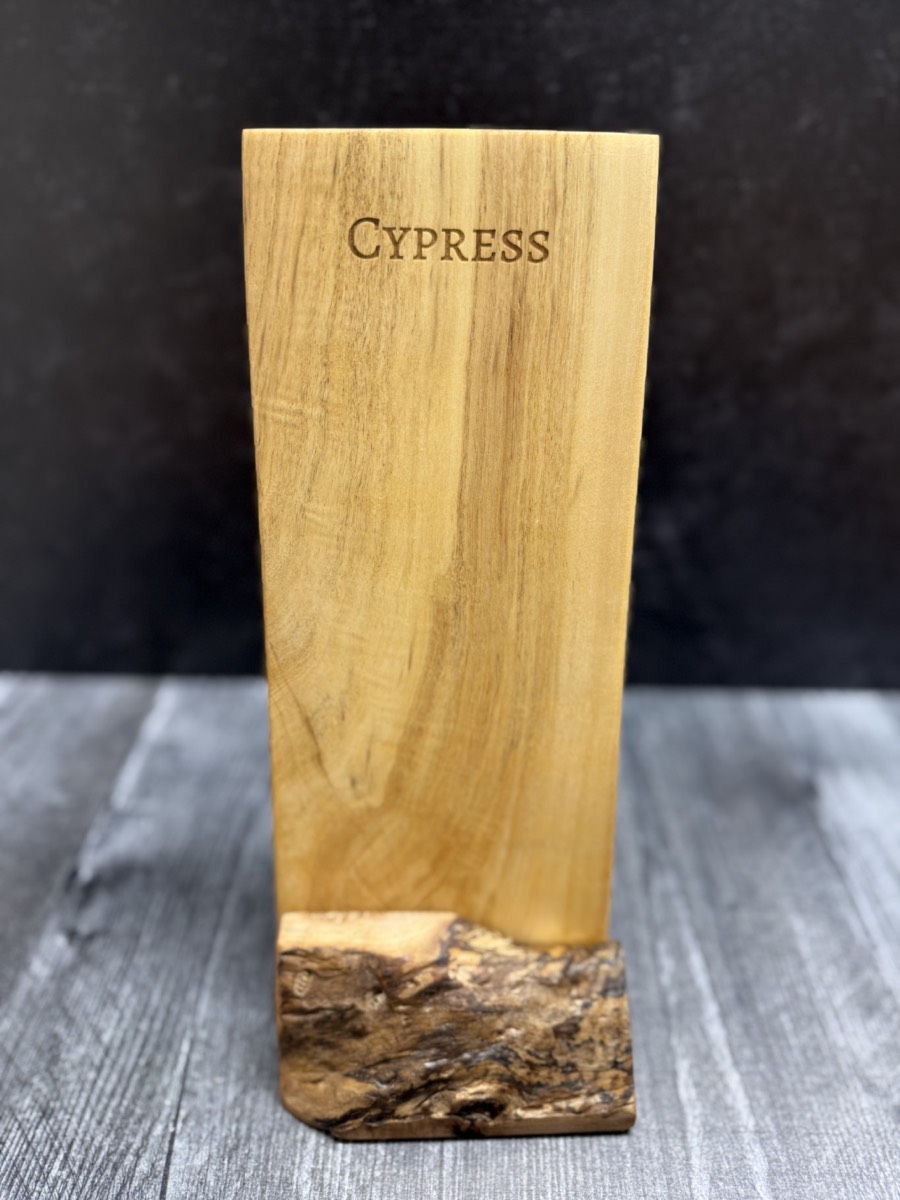
Cypress specimen — Taxodium distichum
DomesticTaxodium distichum

Cypress

Once called the wood eternal. Old growth earned the name.

Cypress (Taxodium distichum) is a domestic softwood with a Janka hardness of 510 lbf. Its heartwood ranges from light yellow-brown to reddish brown, the grain is straight with a medium-to-coarse, slightly oily feel, and pecky cypress shows finger-sized voids prized for rustic paneling.

Category
Domestic
Janka
510 lbf
Botanical
Taxodium distichum
Shipped at
6–8% MC

Taxodium distichum Bald Cypress · Bald Cypress · Coastal Plain of the southeastern United States from southern Delaware and Maryland south through Florida and west to eastern Texas

Coastal Plain of the southeastern United States from southern Delaware and Maryland south through Florida and west to eastern Texas.

A deciduous conifer. Heartwood from light yellow-brown to reddish brown.

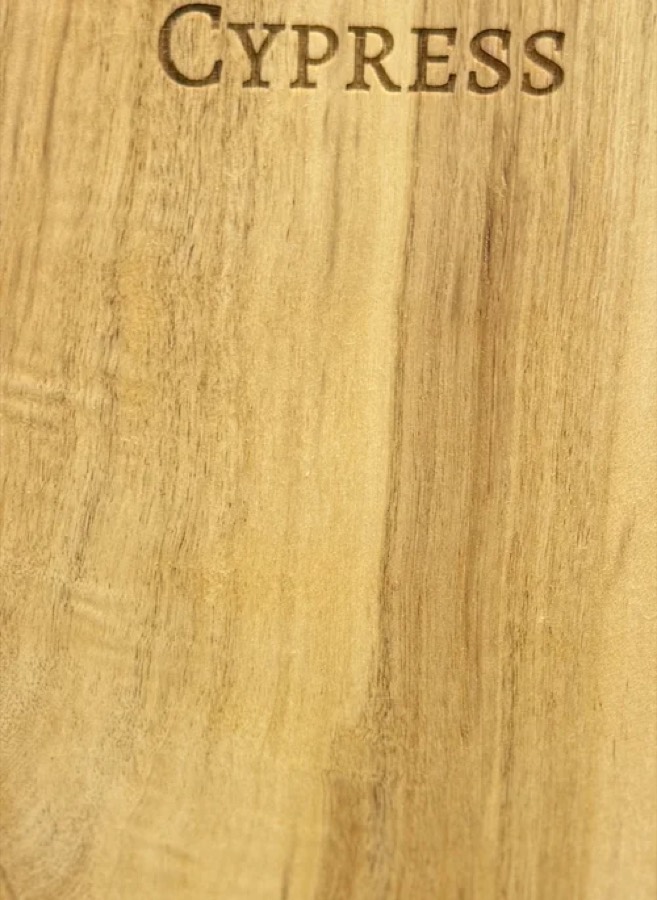
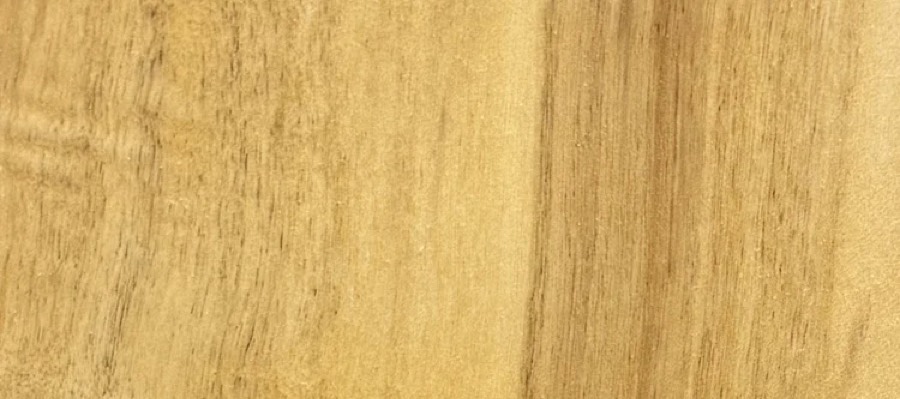
Detail of Cypress grain — figured wood texture, photographed at Raw Heartwood
A close read on the grain. Detail of this specimen

What you see.

Heartwood from light yellow-brown to reddish brown. Sinker logs pulled out of southern rivers run warmer and darker. Sapwood nearly white, sharply separated. Pecky cypress — the leftover of a fungal infection that died out — has finger-sized voids running with the grain. Rustic paneling people pay extra for it.

Heartwood color detail of Cypress (Taxodium distichum)

Heartwood, this specimen

How the grain runs.

Straight. Medium to coarse. A slightly oily feel from the natural extractives. Old-growth shows a sharper earlywood-to-latewood transition than plantation stock.

Closer detail of Cypress grain figure

Closer in

On the bench.

Old-growth heartwood was called the wood eternal. Second-growth is only moderately durable — the cypressene that does the work takes decades to build up. Sapwood is non-durable. Works fine by hand or machine. Soft, so a dull edge raises the grain. Glues and finishes well. Holds paint and stain. Nail-holding is moderate. Sour, a little rancid at the cut. Goes away with seasoning. Reported sensitizer. Dust can hit the lungs. Pollen is its own problem in the South.

The numbers, looked at directly.

Janka Hardness

0lbf

2,270 N. Side-hardness — force to embed a half-inch steel ball halfway into the wood.

Average Dried Weight

0lbs/ft³

515 kg/m³. At 12% MC.

Specific Gravity

0.42/ 0.46 at 12% MC

Basic over green volume; second number at 12% moisture content.

Hardness, in context
Pine 380 Cherry 950 Red Oak 1,220 H. Maple 1,450 Hickory 1,820 Jatoba 2,350 cypress

A side-hardness measurement. Higher number, harder wood.

Shrinkage — radial / tangential / volumetric
3.8%radial
6.2%tangential
10.5%volumetric

On sourcing

Old growth nearly exhausted. Sinker logs fill the gap.

Not on CITES. IUCN Least Concern globally. Some states protect inland populations — Indiana lists it Threatened. Old-growth is mostly gone. Sinker logs salvaged from rivers and bottoms are a real share of the supply now.

What it's for.

Worth knowing.

A deciduous conifer. Drops its needles every fall. The knees that come up out of swamp roots — nobody has settled the function. Old-growth and sinker stock cost more because plantation second-growth does not have the same decay resistance.

Sources & references.

  1. Wood Handbook — Wood as an Engineering Material (FPL-GTR-282) — USDA Forest Service, Forest Products Laboratory (2021)
  2. Baldcypress (Taxodium distichum) — FPL Tech Sheet — USDA Forest Service, Forest Products Laboratory
  3. Silvics of North America: Taxodium distichum (L.) Rich. — Baldcypress — Wilhite, L.P.; Toliver, J.R. (USDA Forest Service) (1990)
  4. Taxodium distichum — IUCN Red List of Threatened Species — Farjon, A. (2013)
  5. Taxodium distichum — Wikipedia contributors
  6. Baldcypress (Taxodium distichum) — The Wood Database

Common questions.

Is cypress hard enough for furniture, and how does it compare to other woods?
Cypress is soft, with a Janka side-hardness of 510 lbf (USDA Forest Products Laboratory value at 12% MC), well below cherry, red oak, or hard maple. Because it is soft, a dull edge raises the grain when working it.
Can cypress be used outdoors?
Old-growth heartwood was called the wood eternal, but second-growth is only moderately durable because the cypressene that provides decay resistance takes decades to build up, and sapwood is non-durable. It is traditionally used for exterior siding, shingles, decking, docks and bridges, and boatbuilding.
Where does Raw Heartwood's cypress come from and how is it dried?
Cypress is native to the Coastal Plain of the southeastern United States, and with old-growth nearly exhausted, sinker logs salvaged from rivers and bottoms now make up a real share of the supply. Raw Heartwood kiln-dries its lumber to 6-8% moisture content.

From the library to your bench

We mill, dry & sell Cypress in West Chicago.

Tell us what you're building and we'll cut to order.

Request a slab or a cut →