Raw HeartwoodXylarium
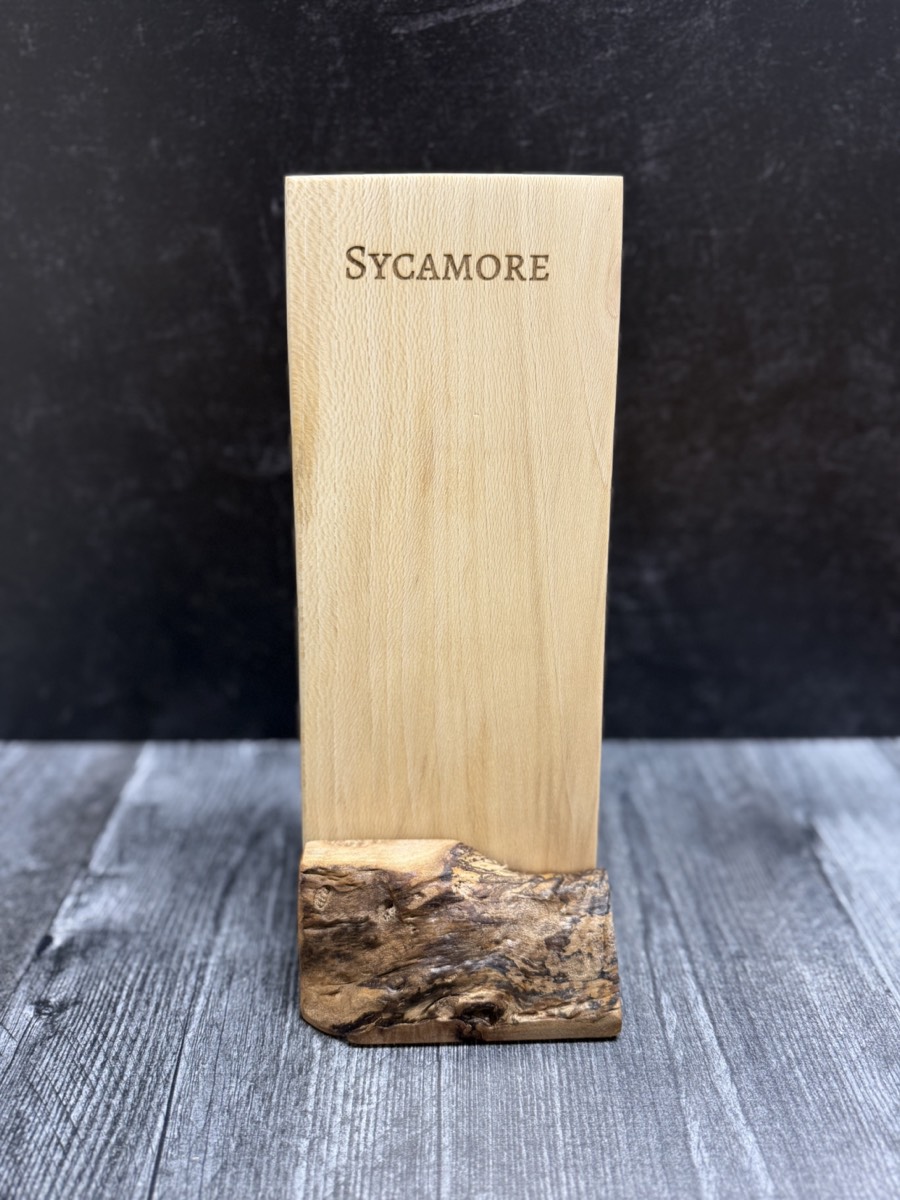
Sycamore specimen — Platanus occidentalis
DomesticPlatanus occidentalis

Sycamore

The wood that punishes a careless drying yard.

Sycamore (Platanus occidentalis) is a domestic hardwood with a Janka hardness of 770 lbf. Its heartwood is light to medium reddish brown, and quartersawn boards show a large lacy ray fleck, bigger and more conspicuous than oak fleck.

Category
Domestic
Janka
770 lbf
Botanical
Platanus occidentalis
Shipped at
6–8% MC

Platanus occidentalis American Sycamore · American Sycamore · Eastern and central United States

Eastern and central United States.

Notorious for drying badly. Heartwood light to medium reddish brown.

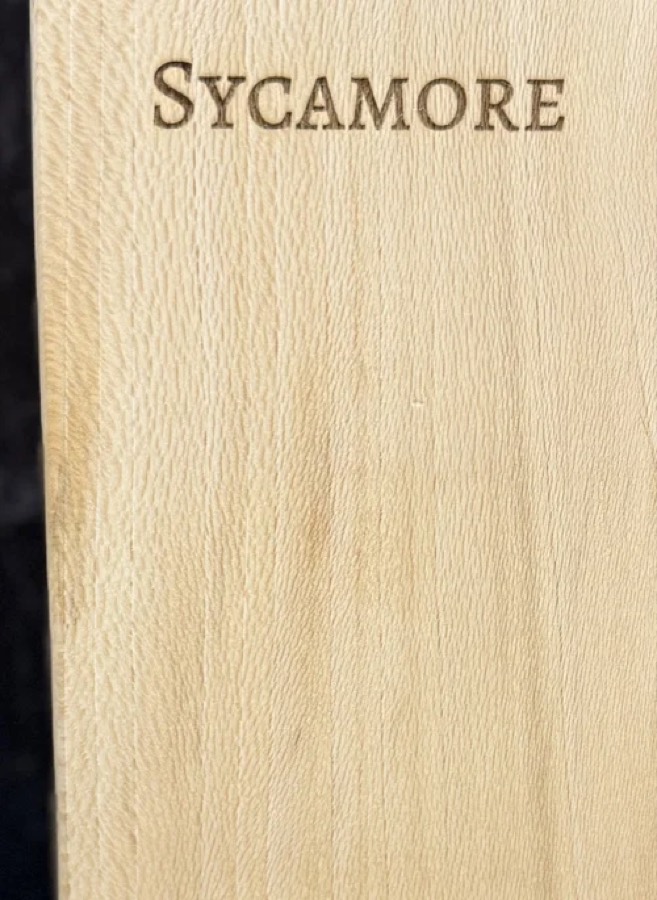
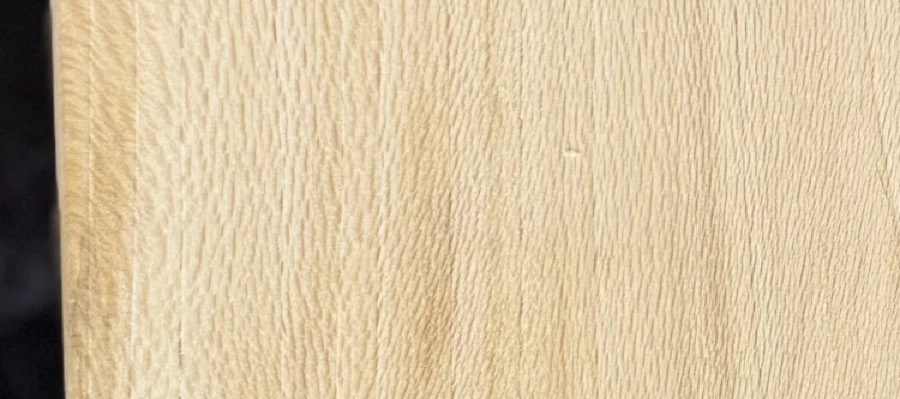
Detail of Sycamore grain — figured wood texture, photographed at Raw Heartwood
A close read on the grain. Detail of this specimen

What you see.

Heartwood light to medium reddish brown. Wide pale sapwood, nearly white to light tan. Quartersawn sycamore shows a big lacy ray fleck — bigger and more conspicuous than oak fleck. It gets sold as Lacewood, though true Lacewood is a different tree (Cardwellia sublimis).
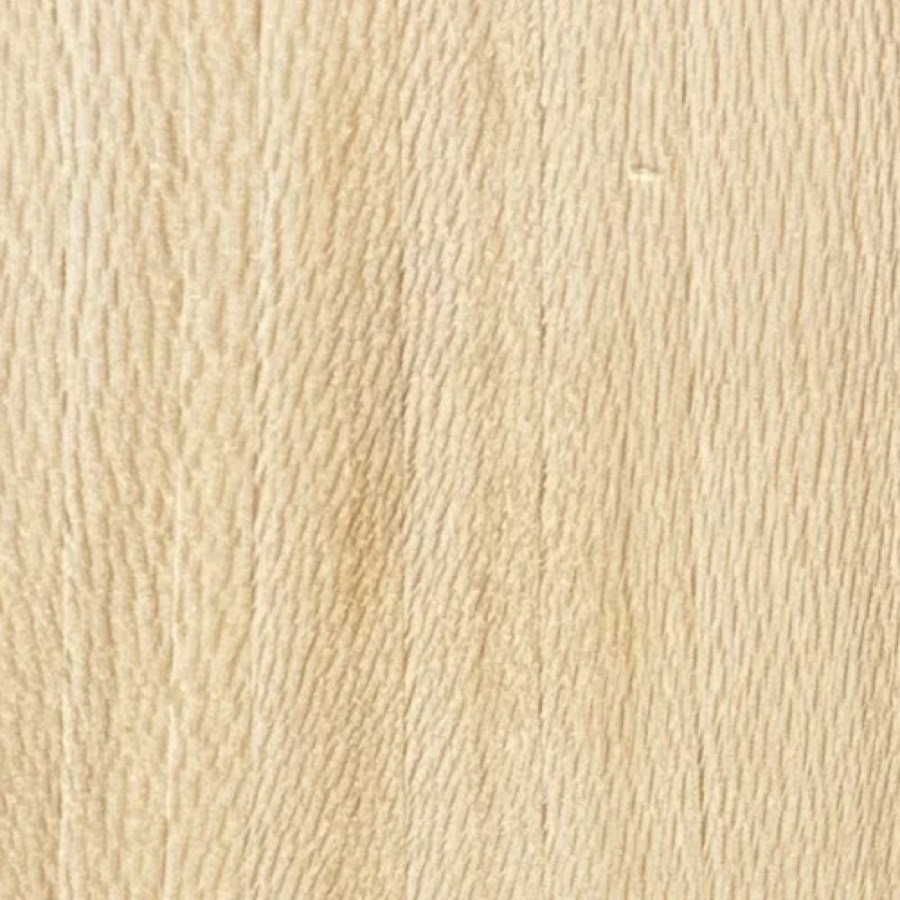
Heartwood color detail of Sycamore (Platanus occidentalis)

Heartwood, this specimen

How the grain runs.

Interlocked. Fine to medium texture. Slight luster. The interlock is what gives quartersawn its figure — and what makes flat planing a pain.

Closer detail of Sycamore grain figure

Closer in

On the bench.

Non-durable to perishable. Poor insect resistance. Indoors only without treatment. The interlock tears out under planers and jointers. The wood twists and warps during drying — sticker it heavy. Once it is stable, it turns, glues, screws, and finishes well. Pre-bore for nails near edges. None when dry. Reported respiratory sensitizer. Possible skin and eye irritation. Severe reactions are uncommon.

The numbers, looked at directly.

Janka Hardness

0lbf

3,430 N. Side-hardness — force to embed a half-inch steel ball halfway into the wood.

Average Dried Weight

0lbs/ft³

550 kg/m³. At 12% MC.

Specific Gravity

0.46/ 0.49 at 12% MC

Basic over green volume; second number at 12% moisture content.

Hardness, in context
Pine 380 Cherry 950 Red Oak 1,220 H. Maple 1,450 Hickory 1,820 Jatoba 2,350 sycamore

A side-hardness measurement. Higher number, harder wood.

Shrinkage — radial / tangential / volumetric
5.0%radial
8.4%tangential
14.1%volumetric

On sourcing

Where this wood comes from matters.

Not on CITES. IUCN Least Concern. Plenty of it across its range.

What it's for.

Worth knowing.

Notorious for drying badly. Sticker it heavy, weight it down, watch for twist and cup. Once it is dry it behaves. Europeans call the genus Planetree.

Sources & references.

  1. Wood Handbook — Wood as an Engineering Material (FPL-GTR-282) — USDA Forest Service, Forest Products Laboratory (2021)
  2. American Sycamore (Platanus occidentalis) — FPL Tech Sheet — USDA Forest Service, Forest Products Laboratory
  3. Silvics of North America: Platanus occidentalis L. — American Sycamore — Wells, O. O.; Schmidtling, R. C. (USDA Forest Service) (1990)
  4. Platanus occidentalis — IUCN Red List of Threatened Species — Stritch, L. (2018)
  5. Platanus occidentalis — Wikipedia contributors
  6. American Sycamore (Platanus occidentalis) — The Wood Database
  7. American Sycamore — Species Guide — American Hardwood Export Council (AHEC)

Common questions.

How hard is sycamore?
Sycamore has a Janka hardness of 770 lbf (3,430 N), a side-hardness measure of the force needed to embed a half-inch steel ball halfway into the wood. This USDA Forest Products Laboratory value at 12% moisture content puts it below cherry and well under red oak and hard maple.
Can sycamore be used outdoors?
No. Sycamore is rated non-durable to perishable with poor insect resistance, so it is suited to indoor use only unless treated. Common applications include veneer, furniture parts, butcher blocks, flooring, interior trim, and instrument parts.
Is sycamore hard to work with?
Its interlocked grain tears out under planers and jointers, making flat planing difficult, and the wood twists and warps during drying, so it must be stickered heavily. Once stable it turns, glues, screws, and finishes well; pre-bore for nails near edges.

From the library to your bench

We mill, dry & sell Sycamore in West Chicago.

Tell us what you're building and we'll cut to order.

Request a slab or a cut →