Raw HeartwoodXylarium
Silk Oak specimen — Grevillea robusta
ExoticGrevillea robusta

Silk Oak

Not an oak. Proteaceae. Big lacy ray fleck on the quarter.

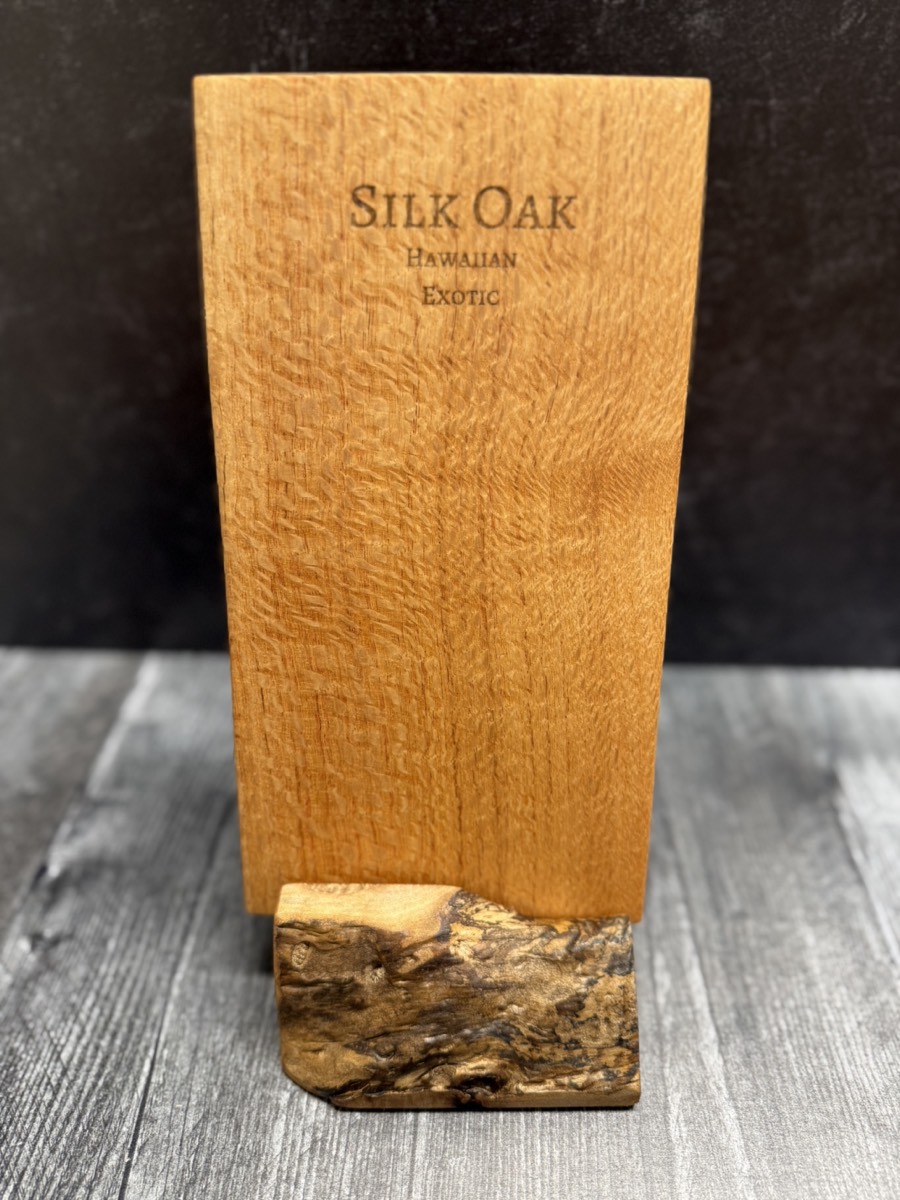
Silk Oak (Grevillea robusta) is an exotic hardwood with a Janka hardness of 840 lbf — and not a true oak. Its pinkish to reddish-brown heartwood shows a large, lacy ray fleck on quartersawn faces, which is the figure it is bought for.

Category
Exotic
Janka
840 lbf
Botanical
Grevillea robusta
Shipped at
6–8% MC

Grevillea robusta Native to a small region of subtropical eastern Australia (southeast Queensland and northeast New South Wales)

Native to a small region of subtropical eastern Australia (southeast Queensland and northeast New South Wales).

Not an oak. Heartwood warm pinkish-brown to reddish-brown with a slight gray cast.

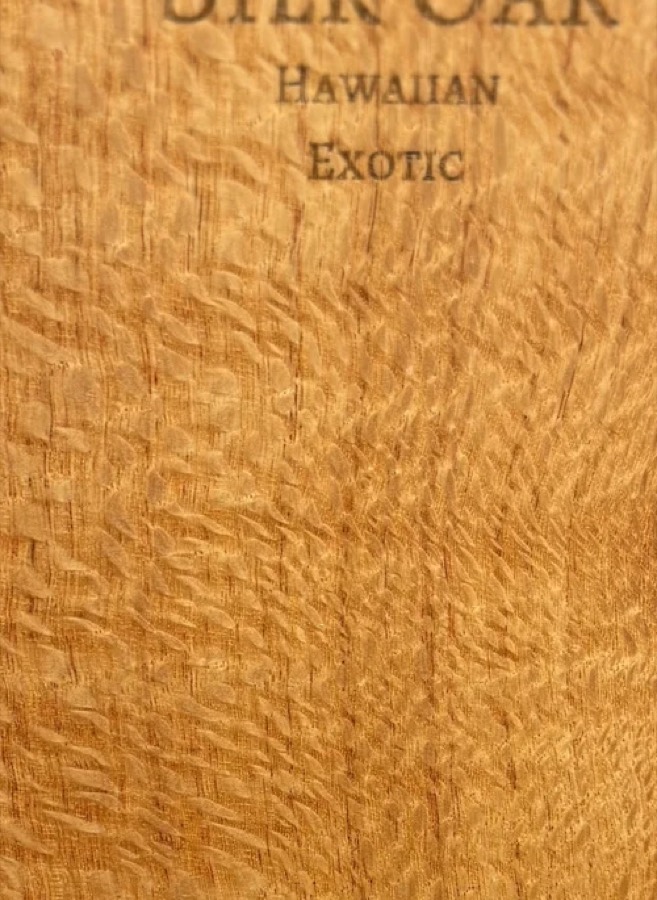
Detail of Silk Oak grain — figured wood texture, photographed at Raw Heartwood
A close read on the grain. Detail of this specimen

What you see.

Heartwood warm pinkish-brown to reddish-brown with a slight gray cast. Big lacy ray fleck on quartersawn faces — that is the look. Pale sapwood, sharp line. Visually close to true lacewood, which is a relative.

Heartwood color detail of Silk Oak (Grevillea robusta)

Heartwood, this specimen

How the grain runs.

Straight to slightly interlocked. Very large medullary rays drive the flake figure on radial faces. Medium to coarse texture, open pores.

Closer detail of Silk Oak grain figure

Closer in

On the bench.

Moderately durable. Sapwood gets lyctid beetles. Not for prolonged exterior or ground contact without treatment. Generally easy. The big rays make planing and sanding tricky — the figure can be brittle and chip out. Turns and finishes well. Glues acceptably. Takes stain and finish readily. None when dry. Documented sensitizer. Leaves, flowers, and dust can cause contact dermatitis. The dust contains resorcinols (grevillol) related to the compounds in poison ivy. Repeat exposure produces real skin reactions. Dust extraction and skin protection.

The numbers, looked at directly.

Janka Hardness

0lbf

3,740 N. Side-hardness — force to embed a half-inch steel ball halfway into the wood.

Average Dried Weight

0lbs/ft³

560 kg/m³. At 12% MC.

Specific Gravity

0.46/ 0.56 at 12% MC

Basic over green volume; second number at 12% moisture content.

Hardness, in context
Pine 380 Cherry 950 Red Oak 1,220 H. Maple 1,450 Hickory 1,820 Jatoba 2,350 silk oak

A side-hardness measurement. Higher number, harder wood.

Shrinkage — radial / tangential / volumetric
3.5%radial
7.5%tangential
11.5%volumetric

On sourcing

Where this wood comes from matters.

Not on CITES. IUCN Least Concern. Native Australian range is small, but plantation cultivation across the tropics — Hawaii, India, East Africa, the Americas — supplies plenty. Invasive in several regions. Hawaiian-grown silk oak is usually a forest-management byproduct.

What it's for.

Worth knowing.

Not an oak. Proteaceae, unrelated to Quercus. The "oak" reference is the ray figure, which reads like quartersawn oak. Often confused with or sold against true lacewood (Cardwellia sublimis, also Proteaceae). Both show similar figure, silk oak is more available and usually cheaper.

Sources & references.

  1. Grevillea robusta — Wikipedia contributors
  2. Grevillea robusta — IUCN Red List
  3. Silky Oak (Grevillea robusta) — The Wood Database
  4. Grevillea robusta (silky oak) — Species Profiles for Pacific Island Agroforestry — Harwood, C.E. (2006)
  5. Grevillea robusta — World Agroforestry (ICRAF) Tree Database
  6. Grevillea robusta in Hawaii — CTAHR, University of Hawaii at Manoa
  7. Grevillea robusta — Atlas of Living Australia

Common questions.

Is silk oak a real oak?
No. It is Grevillea robusta, in the family Proteaceae, unrelated to true oaks (Quercus). The 'oak' name refers to its ray figure, which reads like quartersawn oak.
What is silk oak used for?
Its lacy figure makes it popular for decorative veneer, cabinetry, furniture, paneling, picture frames, turning, and ukuleles. It is moderately durable and the sapwood is prone to lyctid beetles, so it is not suited to prolonged exterior or ground contact without treatment.
How does silk oak work on the bench?
It is generally easy to work, but the very large rays make planing and sanding tricky — the figure can be brittle and chip out. It turns and finishes well and takes stain readily. The dust is a documented sensitizer, so use dust extraction. Raw Heartwood kiln-dries its lumber to 6-8% moisture content.

From the library to your bench

We mill, dry & sell Silk Oak in West Chicago.

Tell us what you're building and we'll cut to order.

Request a slab or a cut →