
What you see.
Heartwood warm pinkish-brown to reddish-brown, sometimes with darker streaks and the black "kuro" zones the Japanese trade prizes. Pale cream sapwood, sharp line. Darkens to amber with age.
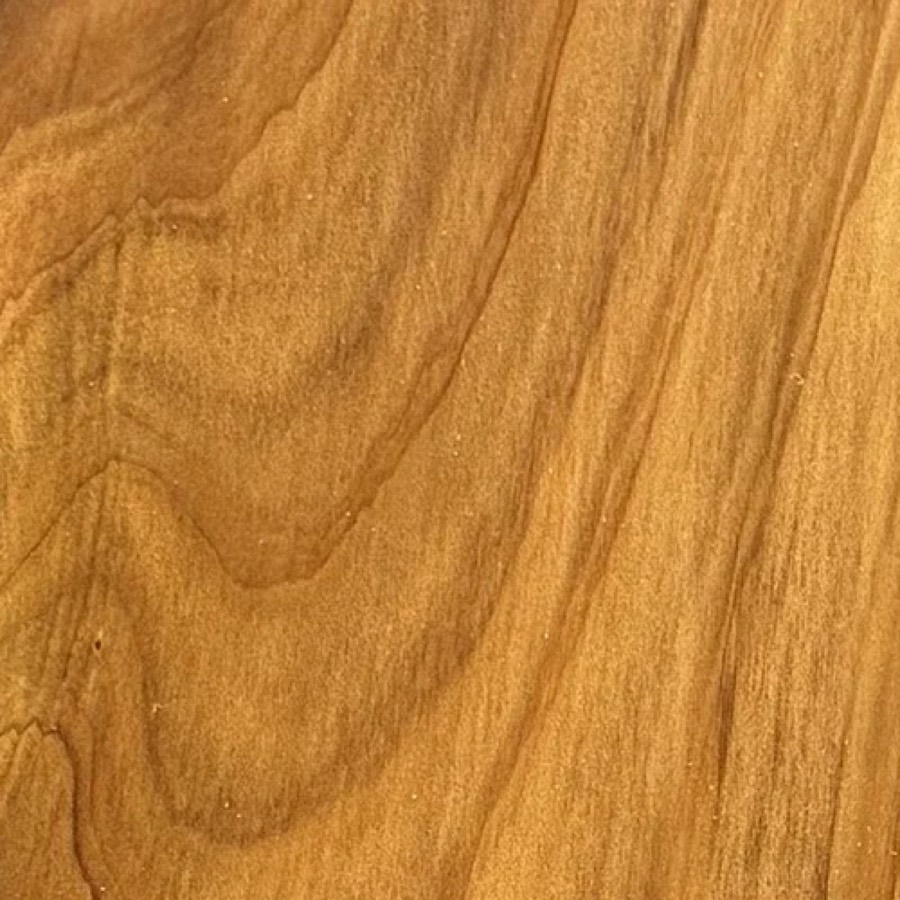
Heartwood, this specimen
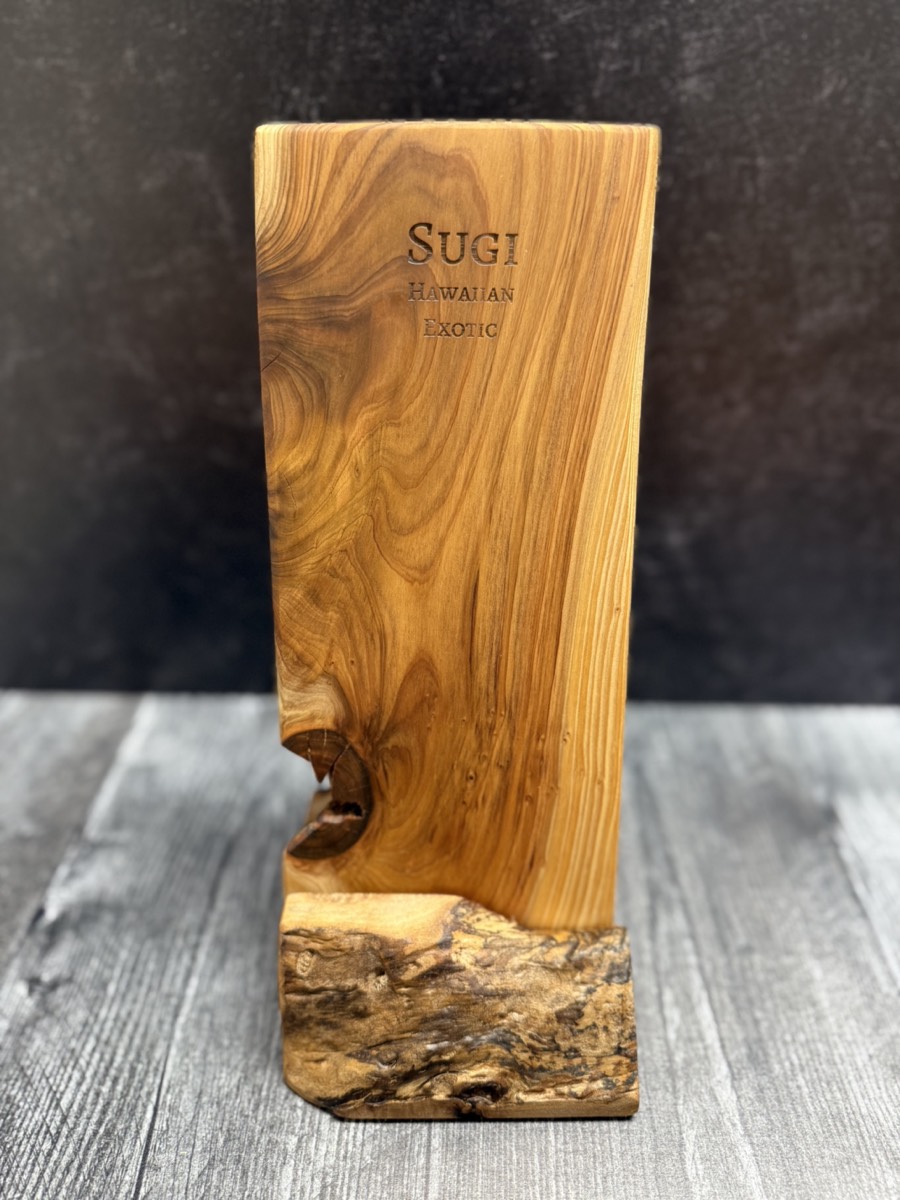
Temple wood. Sake barrel wood. The wood of yakisugi siding.
Sugi (Cryptomeria japonica), or Japanese cedar, is an exotic softwood with a Janka hardness of 510 lbf. Its warm pinkish to reddish-brown heartwood — sometimes showing the prized black 'kuro' zones — is soft, light, aromatic, and naturally decay-resistant.
Cryptomeria japonica Japanese Cedar · Japanese Cedar · Native to Japan
Native to Japan.
National tree of Japan. Heartwood warm pinkish-brown to reddish-brown, sometimes with darker streaks and the black "kuro" zones the Japanese trade prizes.
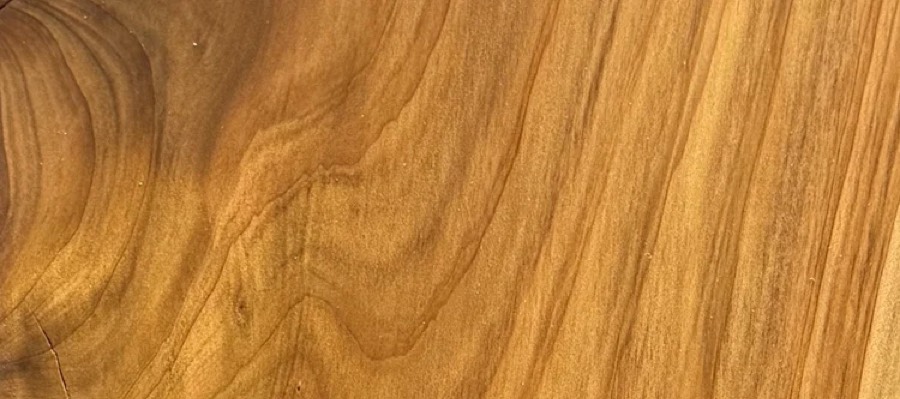
Heartwood warm pinkish-brown to reddish-brown, sometimes with darker streaks and the black "kuro" zones the Japanese trade prizes. Pale cream sapwood, sharp line. Darkens to amber with age.
Heartwood, this specimen
Straight. Medium to coarse texture. Strong earlywood-to-latewood contrast — softwood ring figure shows clearly. Slight luster under finish.
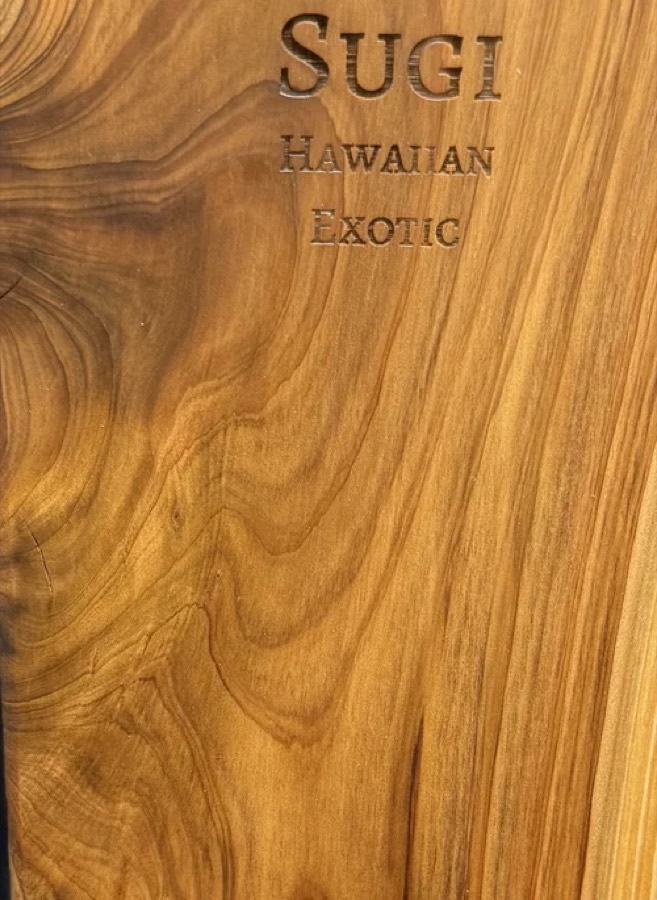
Closer in
Heartwood durable. Good natural decay and insect resistance — the basis for centuries of Japanese exterior architecture. Sapwood is perishable. Very easy. Soft, light, clean-cutting under hand or power. Planes glassy. Splits readily along the grain — the property that runs traditional shake and shingle work. Takes hand-tool finishes beautifully. Glues and finishes well. Dents easily. Distinct spicy, slightly sweet aromatic at the cut. Hangs around in dry wood. Part of the cultural appeal. Sugi pollen drives one of the major hay-fever problems in Japan, but pollen is the tree, not the lumber. The wood dust can irritate lungs and sensitize some workers. Western redcedar is well documented for similar effects. Standard dust precautions.
0lbf
2,270 N. Side-hardness — force to embed a half-inch steel ball halfway into the wood.
0lbs/ft³
420 kg/m³. At 12% MC.
0.34/ 0.42 at 12% MC
Basic over green volume; second number at 12% moisture content.
A side-hardness measurement. Higher number, harder wood.
On sourcing
Not on CITES. IUCN Near Threatened in its limited natural range. Plantation sugi covers roughly 18% of Japan's forest area and is the standard commercial source. Supply is abundant.
National tree of Japan. Lines the approach to many shrines, including the Nikkō avenue. Yakushima's Jōmon Sugi and other ancient trees are protected national monuments. Yoshino, Akita, and Yakusugi are recognized as distinct quality grades. Old-growth Yakusugi is harvest-restricted now and prices reflect it. Yakisugi charred siding has driven recent international demand.
From the library to your bench
Tell us what you're building and we'll cut to order.
Request a slab or a cut →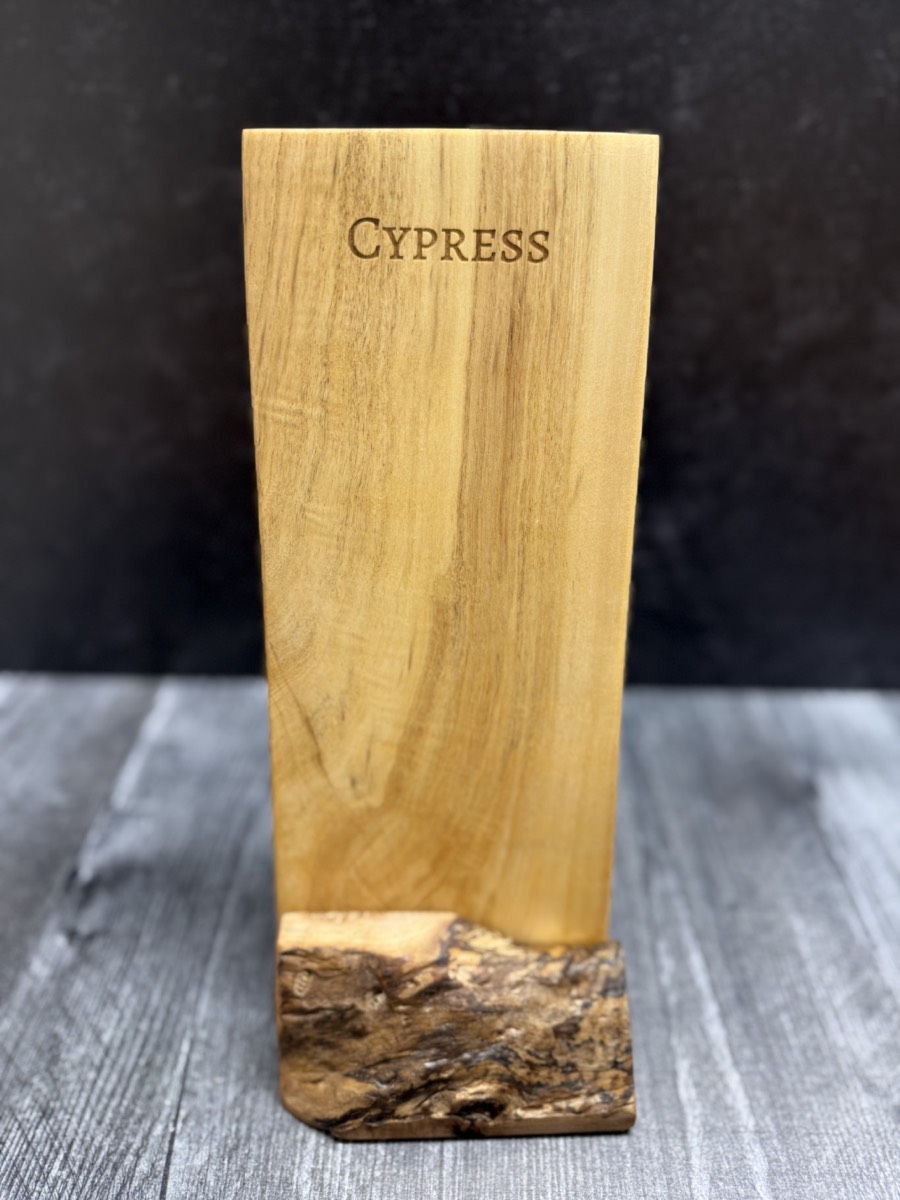
Taxodium distichum
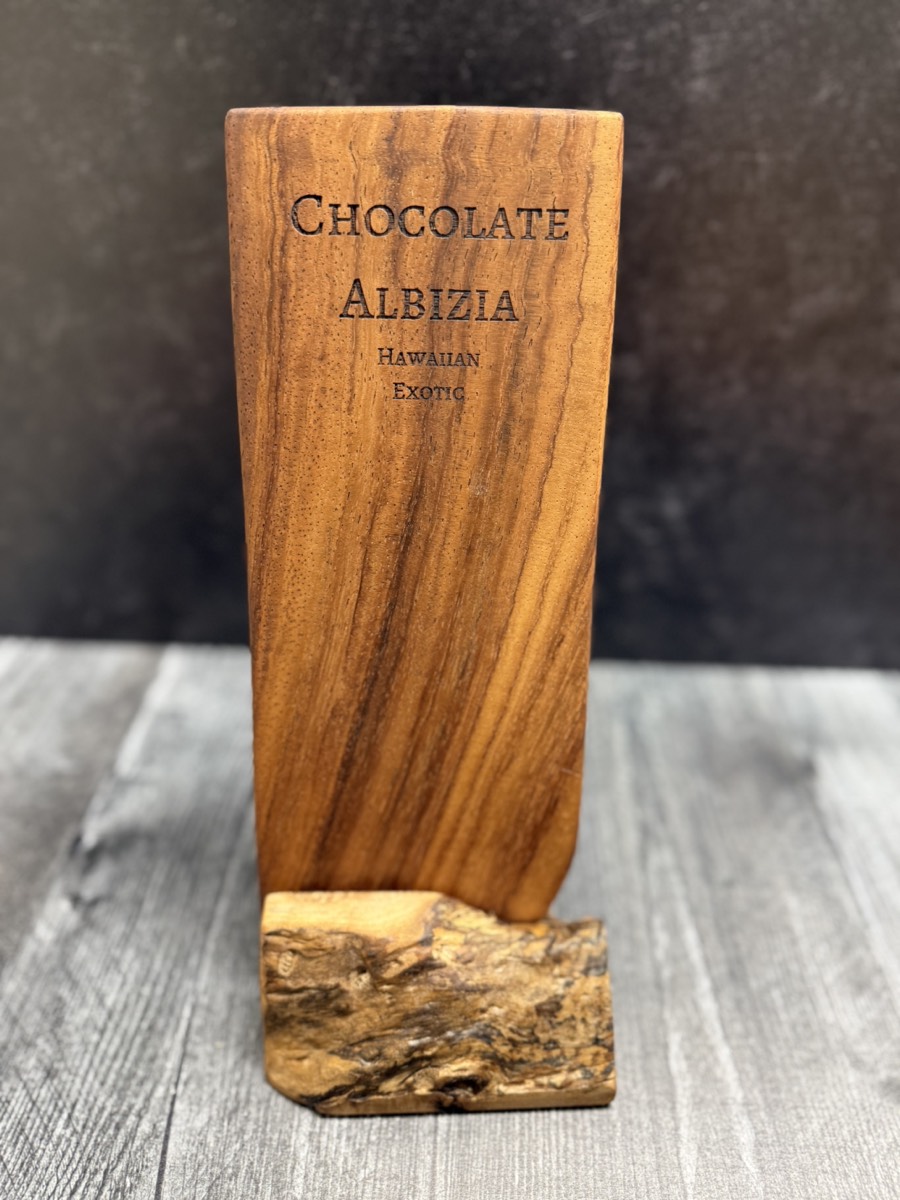
Falcataria moluccana
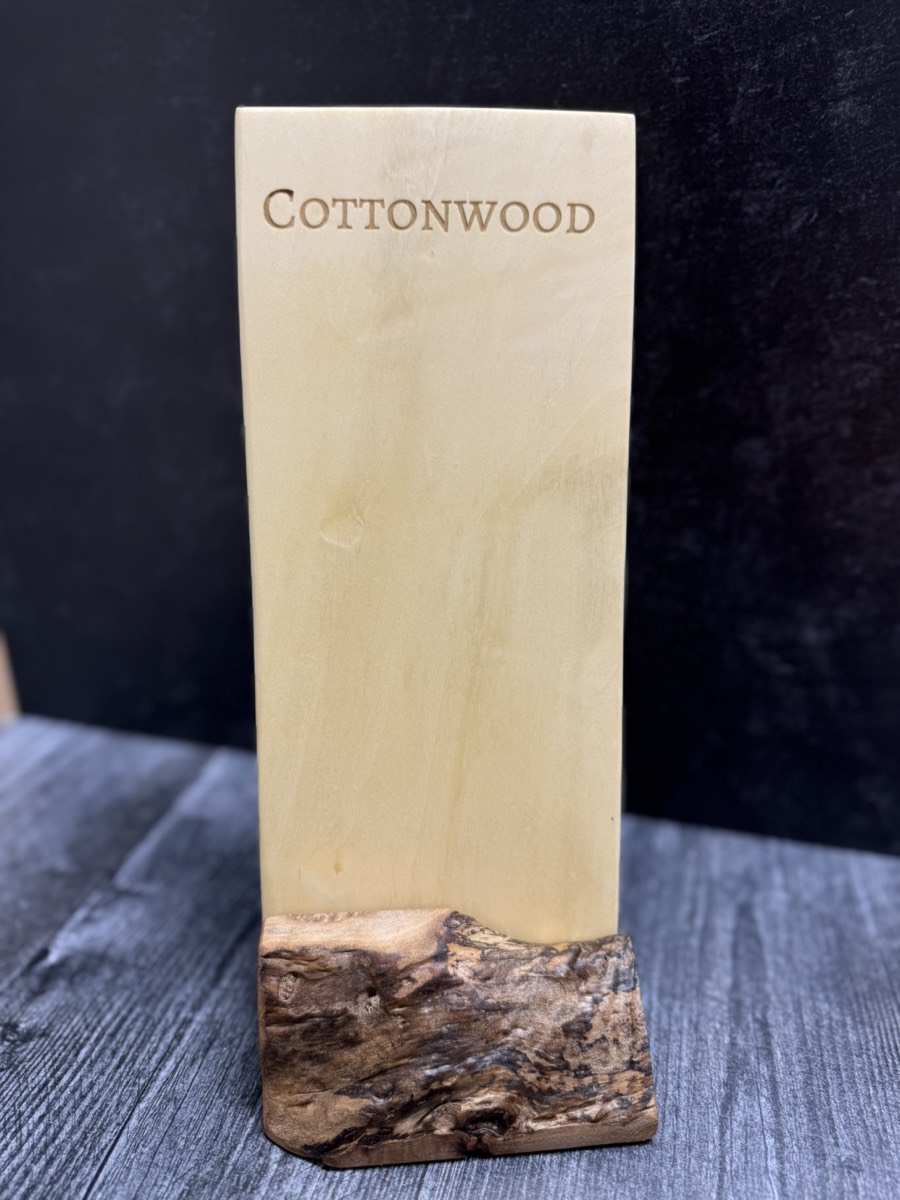
Populus deltoides
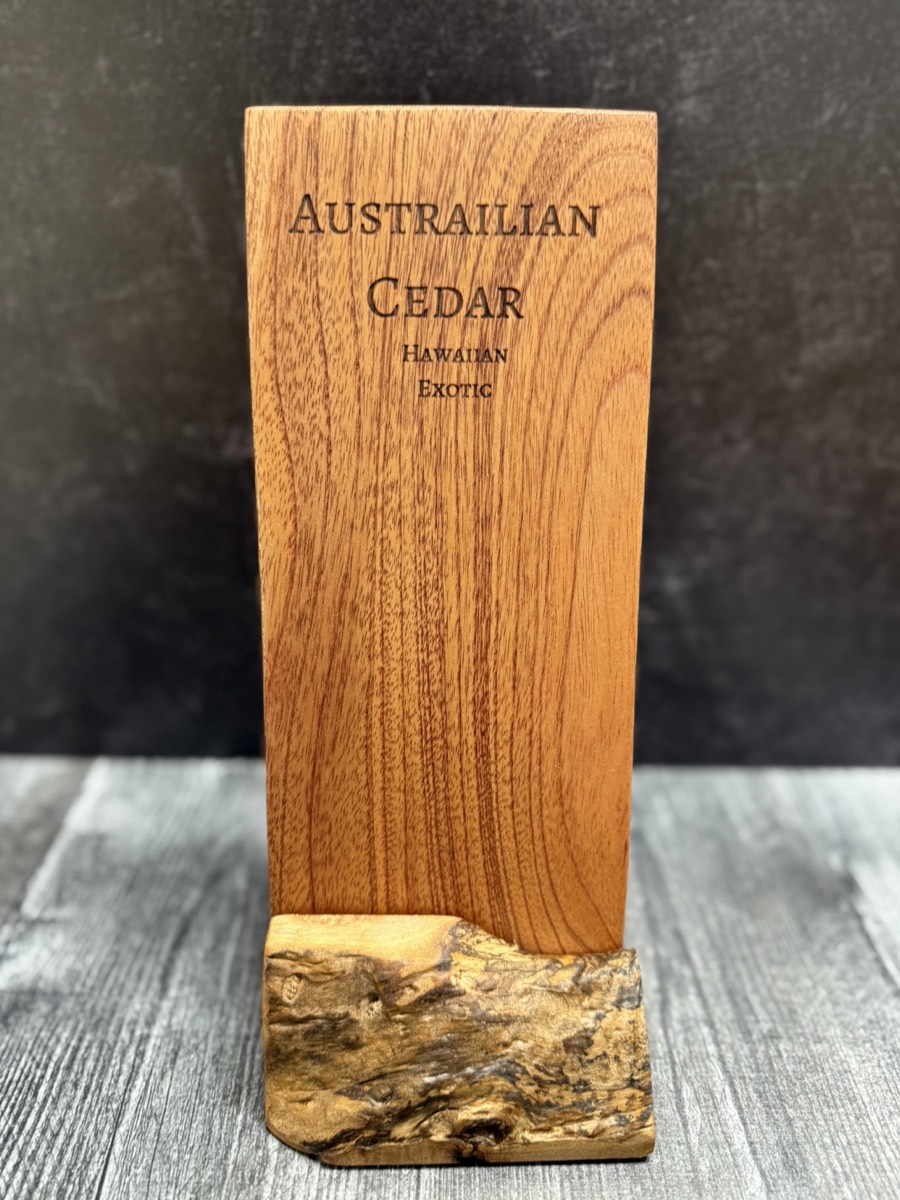
Toona ciliata