
What you see.
Heartwood golden yellow to reddish brown, often streaked, with strong chatoyant ribbon figure on quartersawn faces. Pale yellow sapwood, sharp line. Deepens with age and light into a rich amber-rose.
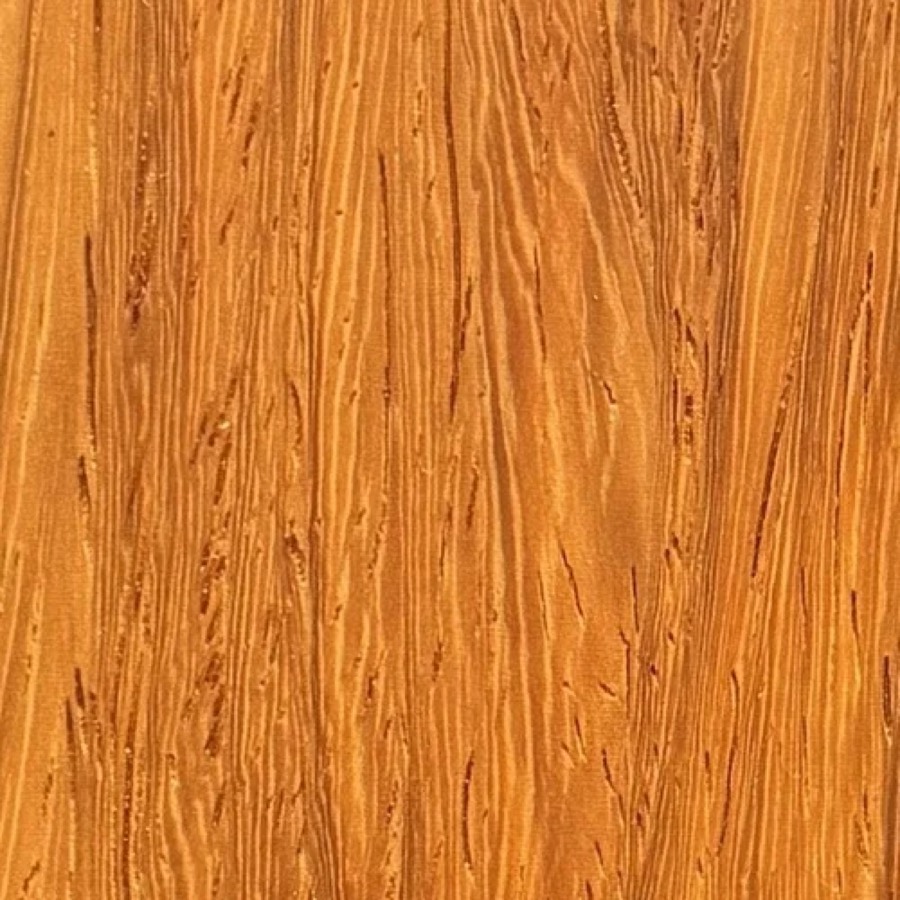
Heartwood, this specimen
CITES Appendix II as of 2024. Permits required, every shipment, every time.
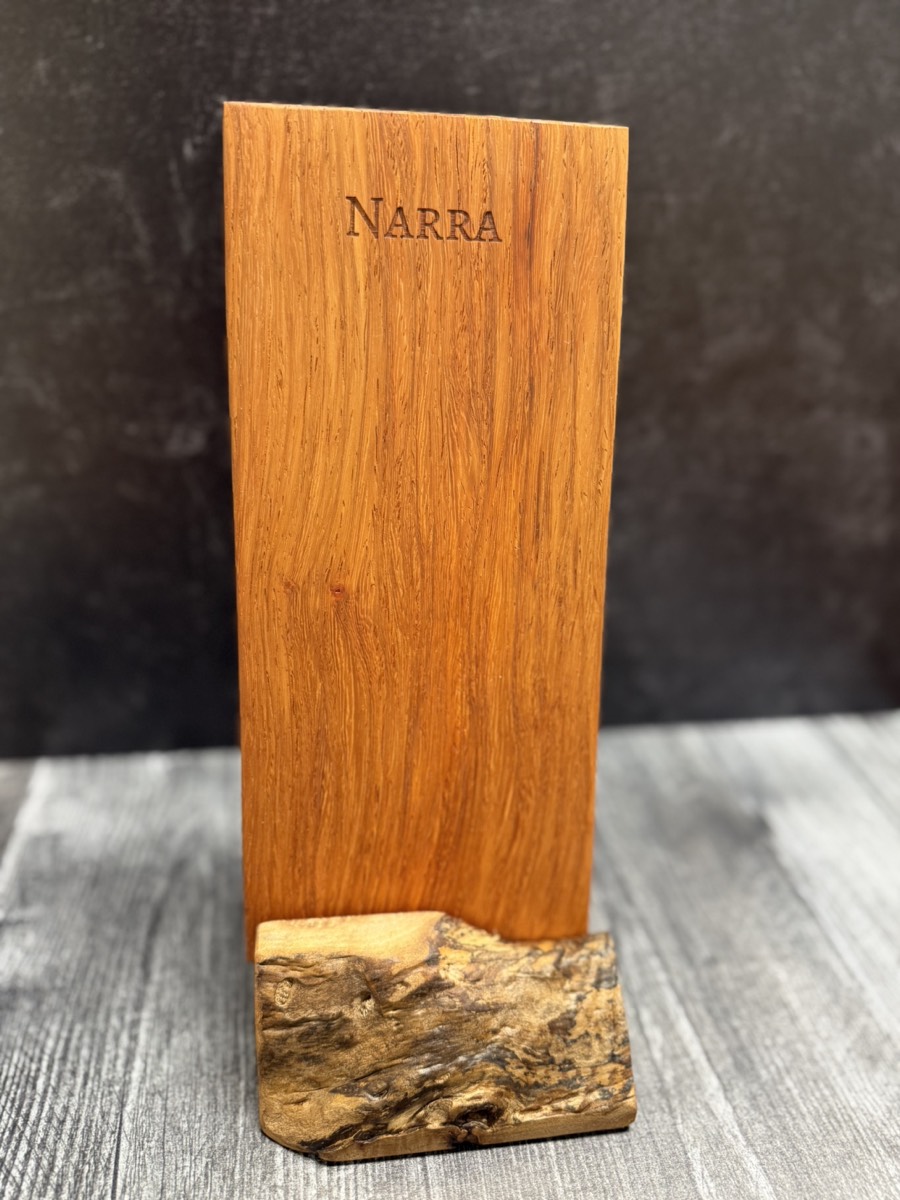
Narra (Pterocarpus indicus) is an exotic hardwood with a Janka hardness of 1,260 lbf. Its golden-yellow to reddish-brown heartwood often shows a chatoyant ribbon figure, and it is very durable — resisting decay and termites well enough for exterior and boatbuilding use.
Pterocarpus indicus Native to Southeast Asia and the western Pacific — Philippines
Native to Southeast Asia and the western Pacific — Philippines.
National tree of the Philippines and culturally significant across Southeast Asia. Heartwood golden yellow to reddish brown, often streaked, with strong chatoyant ribbon figure on quartersawn faces.

Heartwood golden yellow to reddish brown, often streaked, with strong chatoyant ribbon figure on quartersawn faces. Pale yellow sapwood, sharp line. Deepens with age and light into a rich amber-rose.
Heartwood, this specimen
Interlocked. Ribbon stripe and the occasional fiddleback. Medium texture, high luster, slightly oily feel.

Closer in
Very durable. Strong decay resistance, good against termites. Performs in exterior and ground contact. Traditional boatbuilding timber. Generally easy despite the interlock. Figured stock tears. Turns, carves, and finishes superbly. Glues well. Dimensionally stable in service. Low silica compared to most tropical hardwoods. Distinct rose-like or cedar-like fragrance at the cut. Hangs around in fresh-machined stock — typical Pterocarpus. Like other rosewoods and Pterocarpus, narra can cause skin irritation, dermatitis, and respiratory sensitization. Repeat exposure raises the risk. Dust extraction and skin protection.
0lbf
5,610 N. Side-hardness — force to embed a half-inch steel ball halfway into the wood.
0lbs/ft³
660 kg/m³. At 12% MC.
0.53/ 0.66 at 12% MC
Basic over green volume; second number at 12% moisture content.
A side-hardness measurement. Higher number, harder wood.
On sourcing
CITES Appendix II as of 2024 — the CoP19 listing brought all Pterocarpus species not already individually listed under control. Permits required, every shipment, every time. Export permits and non-detriment findings from the country of origin. Re-exports from the U.S. require CITES paperwork too, including on finished goods. IUCN Endangered. Severe historical overharvest — many wild populations are heavily depleted, and the Philippines and Indonesia have logging bans on wild stock. Verify documentation. No exceptions.
National tree of the Philippines and culturally significant across Southeast Asia. Treat it as a regulated rosewood-equivalent: CITES permits for any cross-border movement, verifiable chain of custody, no shortcuts.
From the library to your bench
Tell us what you're building and we'll cut to order.
Request a slab or a cut →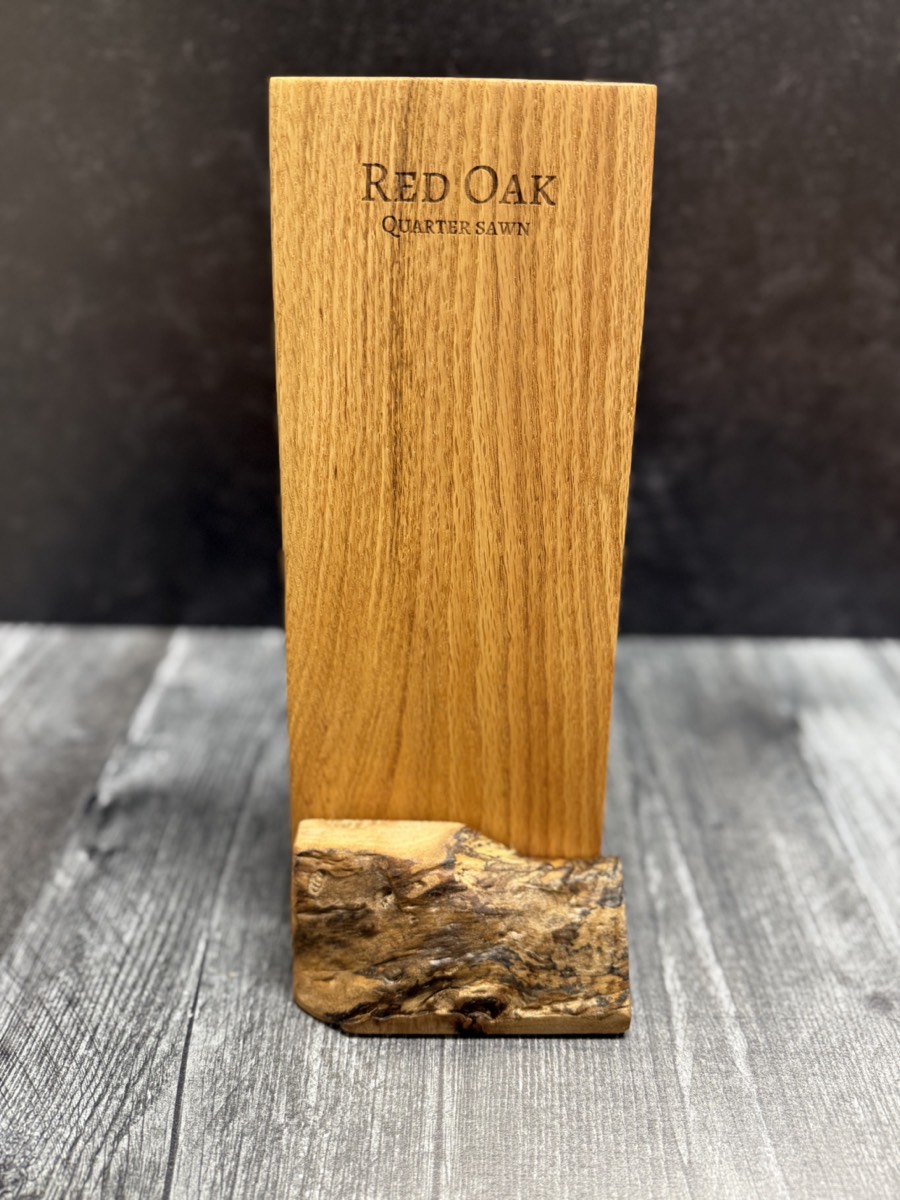
Quercus rubra
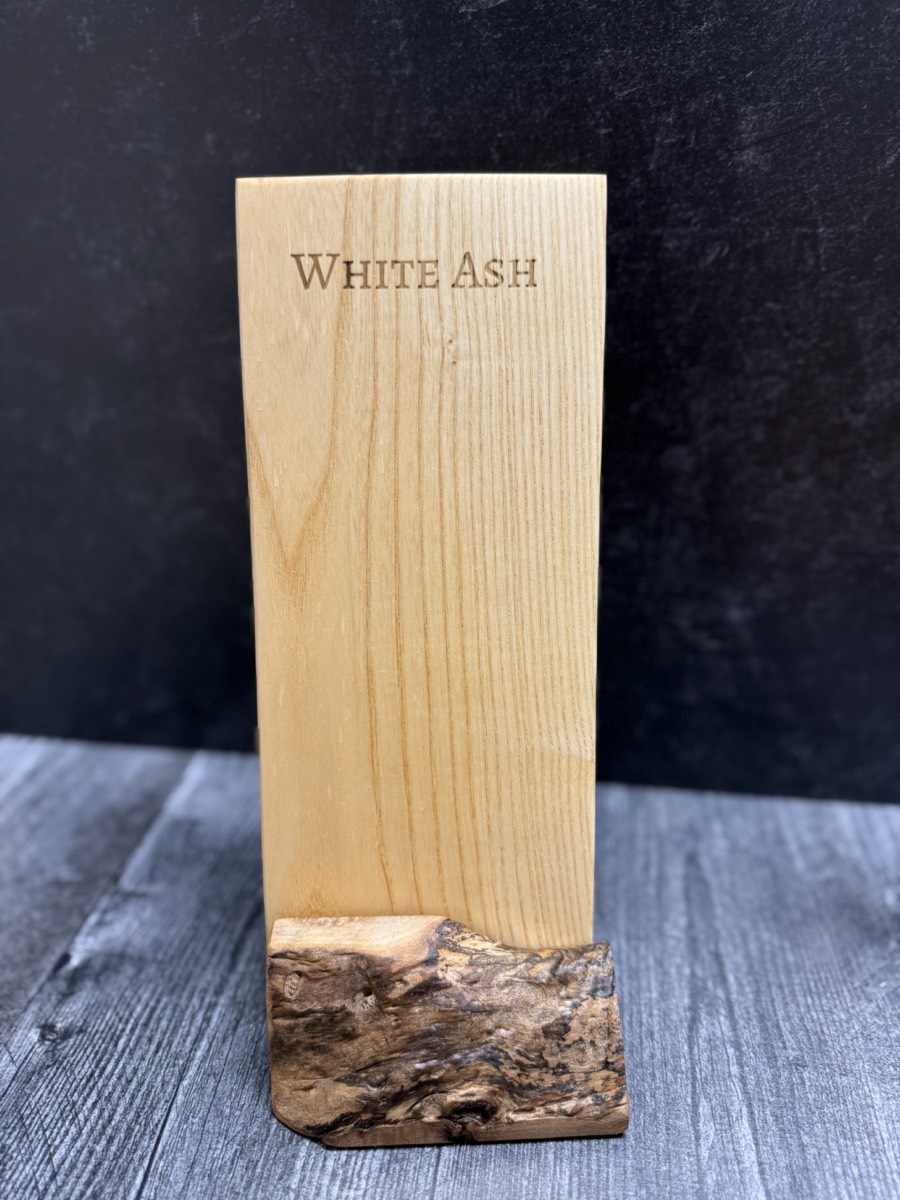
Fraxinus americana
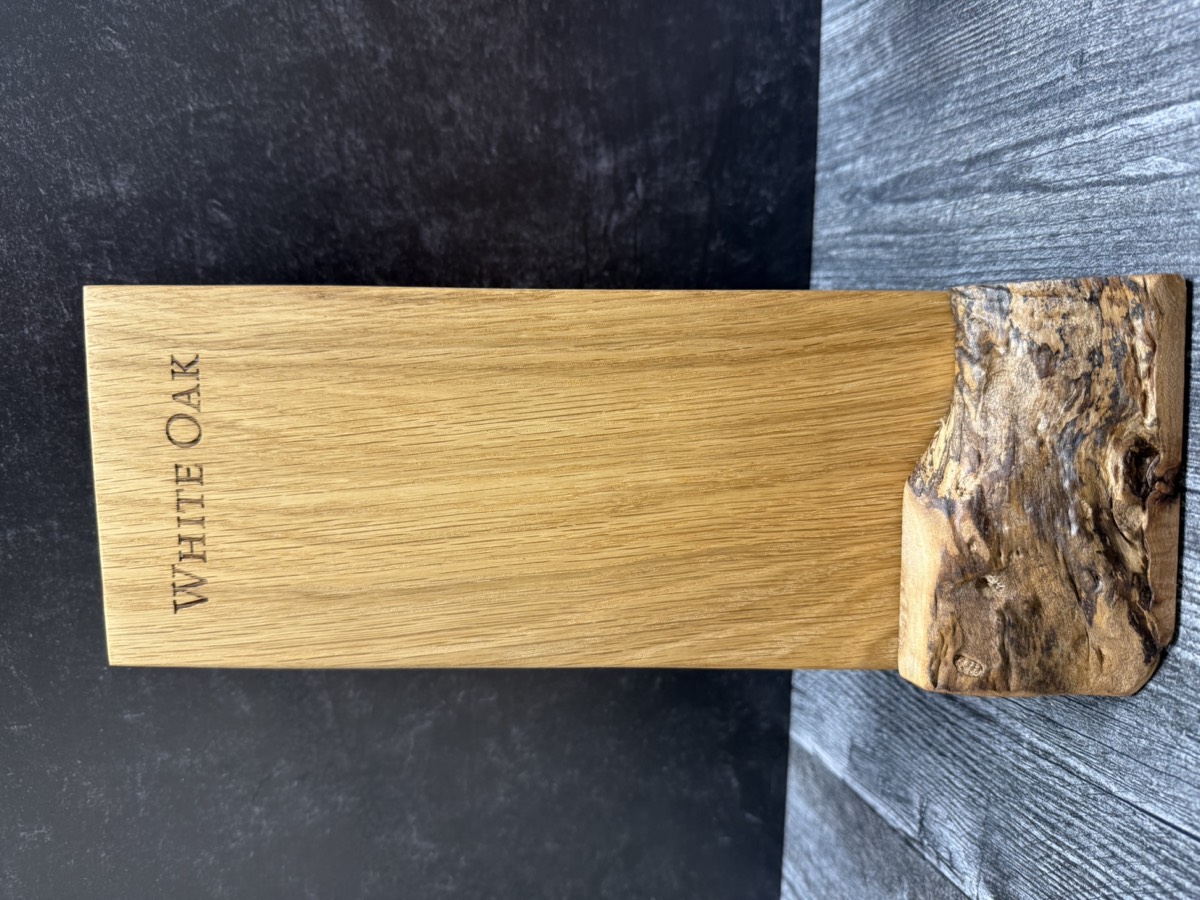
Quercus alba
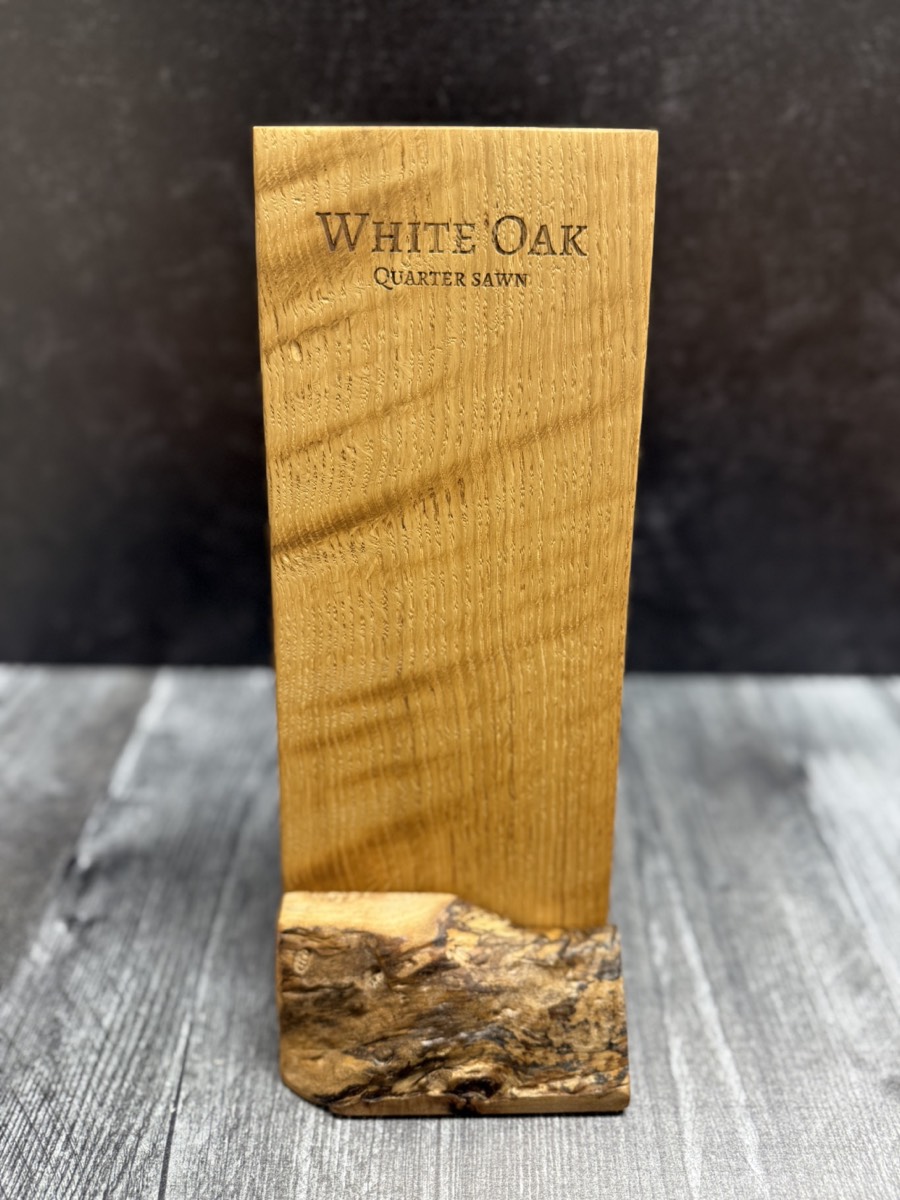
Quercus alba